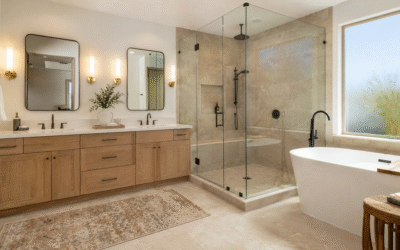
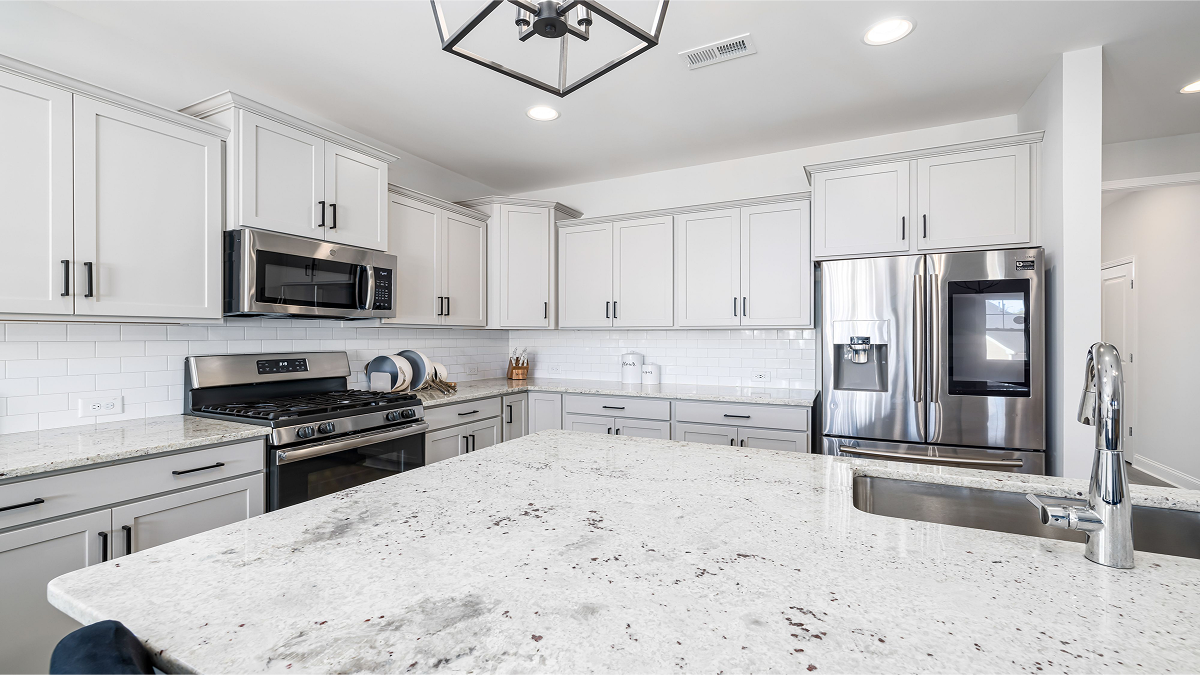
Choosing a countertop is rarely as simple as picking the one that looks best in the showroom. The right surface should hold up to how you actually cook, match the design direction you’re going for, and perform well in your specific environment. For Las Vegas homeowners, that last part matters more than most countertop guides acknowledge.
Here’s a practical look at the most popular kitchen countertop materials compared by durability, maintenance, lifestyle fit, and long-term value.
Kitchen Countertop Materials at a Glance
Before getting into the details, this table gives you a quick side-by-side view across the categories that matter most.
| Material | Durability | Maintenance | Heat Resistance | Cost | Best For |
|---|---|---|---|---|---|
| Quartz | High | Low | Moderate | $$$ | Busy families |
| Granite | High | Moderate | Excellent | $$$ | Serious cooks |
| Quartzite | High | Moderate | Excellent | $$$$ | Luxury kitchens |
| Marble | Moderate | High | Good | $$$$ | Bakers, classic designs |
| Porcelain | High | Low | Excellent | $$$$ | Indoor-outdoor spaces |
| Butcher Block | Moderate | High | Low | $$ | Warm, rustic kitchens |
| Solid Surface | Moderate | Low | Moderate | $$$ | Seamless designs |
| Laminate | Moderate | Low | Low | $ | Budget remodels |
The Most Popular Countertop Materials
Quartz is engineered from crushed quartz crystals and resin, making it non-porous, stain-resistant, and easy to maintain. It needs no sealing and holds up well to daily kitchen use. For a closer look at how quartz stacks up against its closest competitor, see our quartz vs. granite countertops comparison.
Granite is 100% natural stone, quarried in unique slabs. It handles direct heat without damage and offers natural variation that no engineered surface fully replicates. It requires periodic sealing to stay stain-resistant.
Quartzite is a natural metamorphic stone that combines the look of marble with durability closer to granite. It handles heat well and resists scratching, but like granite, needs sealing. It sits at the premium end of the natural stone market.
Marble is the classic choice for bakers and design-forward kitchens. Its naturally cool surface is ideal for pastry work. The tradeoff is real: it etches from acids, stains without regular sealing, and develops a patina over time. Some homeowners love that character. Others find it stressful.
Porcelain slab is one of the fastest-growing countertop materials in kitchen design. It’s harder than granite, non-porous, and completely UV-resistant, which makes it one of the few surfaces that genuinely performs outdoors. Porcelain’s combination of heat resistance and low maintenance is driving its growth in both indoor and outdoor kitchen applications.
Butcher block brings warmth and texture that no stone surface replicates. It works well as an island or prep station surface paired with stone perimeter counters. It needs regular oiling, is not heat-resistant, and can scratch, but scratches can be sanded out and the surface refinished.
Solid surface materials like Corian offer seamless installation with no visible seams or grout lines. They’re repairable, easy to clean, and work well in contemporary kitchen designs. They’re more susceptible to heat and scratching than stone options.
Laminate has come a long way from its dated reputation. Modern laminate mimics stone and wood convincingly, costs significantly less than any natural material, and is easy to maintain. It’s the practical choice for budget remodels, though it doesn’t add the same perceived value at resale.
Which Countertop Fits Your Lifestyle?
This is the question that most countertop guides skip, and it’s the one that matters most.
- Busy families with kids: Quartz. Non-porous, no sealing, wipes clean with soap and water. Low-maintenance countertop performance is hard to beat for high-traffic households.
- Serious home cooks: Granite. If you’re regularly pulling hot pans from the oven or working at high volume, granite’s heat resistance gives you real practical advantage.
- Frequent bakers: Marble. The naturally cool surface keeps dough and chocolate at the right temperature. The maintenance tradeoff is worth it if baking is a regular part of your kitchen routine.
- Luxury kitchens: Quartzite. The visual depth and natural variation of quartzite is unmatched, and it holds up better than marble over time.
- Outdoor kitchens: Porcelain or granite. Both handle UV exposure and heat without degrading. Quartz is not suitable outdoors in Las Vegas.
- Budget-conscious remodels: Laminate. A well-chosen laminate in a thoughtfully designed kitchen can look sharp and deliver good durability at a fraction of the cost.
Best Countertops for Las Vegas and Southern Nevada Homes
Nevada’s climate adds a layer to the countertop conversation that most national guides don’t cover. Las Vegas heat, intense UV exposure, and the popularity of outdoor kitchens throughout Henderson, Summerlin, and surrounding communities all affect which materials perform well here.
For indoor kitchens, quartz remains the most popular choice. The hard water common throughout the Las Vegas Valley is a real consideration: quartz’s non-porous surface means mineral deposits can’t penetrate the stone. It’s also consistent in appearance across large kitchen islands, which is a practical advantage in open-plan Las Vegas homes.
For outdoor kitchens, the calculus changes. Quartz contains polymer resin that breaks down under sustained UV exposure, even on a covered patio. Granite handles desert heat and direct sun without issue. Porcelain is the other strong option, as it’s completely UV-resistant and one of the hardest surfaces available for outdoor countertop installation.
Countertops and Kitchen Design Styles
The right material does more than perform well. It should also fit the visual direction of the kitchen.
- Modern and contemporary kitchens: Quartz and porcelain. Clean lines, consistent patterns, and minimal maintenance align with modern design principles.
- Traditional kitchens: Granite and marble. The natural variation and timeless character of these stones suit more classic kitchen styles.
- Transitional designs: Quartzite. It bridges the gap between the warmth of natural stone and the cleaner look of contemporary surfaces.
- Rustic and farmhouse kitchens: Butcher block. Nothing adds warmth to a kitchen island the way wood grain does.
- Contemporary luxury: Waterfall-edge quartz or quartzite. A floor-to-ceiling waterfall edge on an island is one of the most striking details in high-end kitchen design.
Which Countertops Add the Most Home Value?
Premium countertop materials are consistently among the features buyers notice first in a kitchen. According to research from the stone fabrication industry, countertop upgrades typically recoup 85 to 93 percent of their cost at resale, with premium markets often seeing full returns or more.
Quartz, granite, and quartzite all perform well at resale. Quartz tends to have the broadest buyer appeal because it reads as low-maintenance and move-in ready. Quartzite resonates strongly with buyers in the luxury segment. Granite remains a trusted natural stone choice that holds its value.
The material choice matters less than how well it fits the overall kitchen. A premium countertop that clashes with dated cabinetry or an awkward layout doesn’t deliver the same return as one that’s part of a well-considered interior design direction. Countertops are one piece of the kitchen, not the whole picture.
Long-Term Maintenance: What to Expect
Before choosing a material, it’s worth thinking through what ownership actually looks like over five or ten years.
- Will it need sealing? Granite and quartzite need sealing every one to three years. Marble needs it more often. Quartz, porcelain, solid surface, and laminate never need sealing.
- Is it easy to clean? Non-porous surfaces (quartz, porcelain, solid surface) clean up with soap and water. Porous natural stones need more care to avoid staining.
- Can scratches be repaired? Butcher block can be sanded and refinished. Solid surface can be buffed. Stone surfaces are harder to repair if chips or deep scratches occur.
- Will heat damage it? Granite, quartzite, and porcelain handle hot pots without damage. Quartz, butcher block, solid surface, and laminate all require trivets.
Thinking through these questions before installation is far less expensive than regretting the choice two years later.
Choosing the Right Countertop With Fortress DG
There’s no single answer to which kitchen countertop material is best. The right choice depends on how your household uses the kitchen, what your design goals are, how much maintenance you’re willing to take on, and whether you’re planning indoor use, outdoor use, or both.
At Fortress Development Group, we work with homeowners throughout Las Vegas, Henderson, Summerlin, North Las Vegas, and surrounding communities to select surfaces that work beautifully and hold up over time. From material selection and bathroom remodeling to full kitchen renovations, every project starts with a design conversation, not a sales pitch.
Schedule a free estimate and we’ll help you find the countertop direction that fits your kitchen, your lifestyle, and your long-term goals.
Frequently Asked Questions
What is the best material for kitchen countertops?
There isn’t one universal answer. Quartz is the best choice for low-maintenance households. Granite suits serious cooks. Quartzite works well in luxury kitchens. The best material depends on how you cook and how much upkeep you want to manage.
Which countertop material is the most durable?
Quartzite, granite, and porcelain are the most durable options. All three resist scratching and handle daily kitchen use without significant wear. Quartzite and porcelain edge out granite slightly on hardness.
Are quartz countertops better than granite?
It depends on your priorities. Quartz is better for low-maintenance households and indoor use. Granite is better for serious cooks and outdoor kitchens. Neither is universally superior. For a full breakdown, see our quartz vs. granite guide.
What countertop material requires the least maintenance?
Quartz, porcelain, solid surface, and laminate all require no sealing. Quartz and porcelain are the most durable of that group and the easiest to keep clean in a busy kitchen.
Which countertop is best for outdoor kitchens?
Granite and porcelain. Both handle UV exposure and high desert heat without degrading. Quartz contains resin that breaks down outdoors, making it a poor choice for Las Vegas outdoor kitchens.
What countertops do designers recommend avoiding?
Marble in high-traffic family kitchens where maintenance won’t be kept up. Butcher block near the sink or stove where heat and moisture are constant. Laminate in homes where resale value is a priority.
Which countertop materials add the most home value?
Quartz, granite, and quartzite consistently deliver strong resale returns. Quartz has the broadest buyer appeal. Quartzite resonates most in the luxury segment. Premium materials paired with a well-designed kitchen outperform premium materials dropped into an otherwise dated space.
Is quartzite better than quartz?
They’re different materials that suit different priorities. Quartzite is a natural stone with better heat resistance and more natural variation. Quartz is engineered and requires no sealing. Quartzite costs more and needs periodic sealing. Quartz is easier to own day to day.
What is the most affordable countertop material?
Laminate is the most budget-friendly option by a wide margin. Butcher block is the next step up and delivers a look that laminate can’t fully replicate. Both are practical choices for budget-focused remodels.
How do I choose the right countertop for my kitchen?
Start with how you cook, then consider maintenance expectations, design style, and budget. If you have an outdoor kitchen or are in a high-UV environment like Las Vegas, factor in UV resistance. Working with a designer who understands your full kitchen helps ensure the countertop fits the space as a whole.