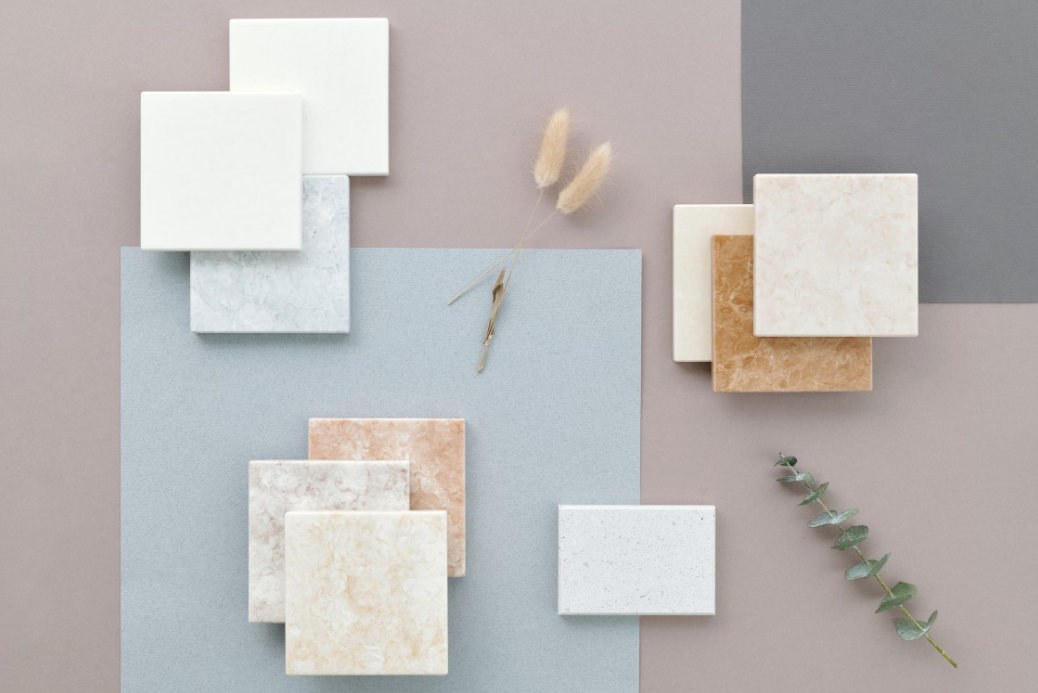
When it comes to premium countertop materials, quartz vs. granite countertops is a debate most Las Vegas homeowners run into at some point. Both look great. Both hold their value. And both can handle the demands of an active kitchen.
But they’re not the same material, and in Nevada’s climate, those differences matter more than most countertop guides let on. Heat, UV exposure, and outdoor entertaining all play a role in which surface will actually perform well in your home long-term.
Here’s a straight look at how each material stacks up, so you can make a decision that fits your lifestyle and your space.
Quartz vs. Granite Countertops at a Glance
Before getting into the details, this table gives you a quick side-by-side view of how both premium kitchen surfaces perform across the categories that matter most.
| Feature | Quartz | Granite |
|---|---|---|
| Composition | Engineered stone (quartz + resin) | 100% natural quarried stone |
| Appearance | Uniform, consistent patterns | Unique veining, no two slabs alike |
| Durability | Very high, chip-resistant | Very high, may chip under impact |
| Heat Resistance | Moderate (avoid direct heat) | Excellent (handles hot pots) |
| Maintenance | Low, no sealing needed | Moderate, periodic sealing required |
| Stain Resistance | Excellent (non-porous surface) | Good when properly sealed |
| Scratch Resistance | Very high | High |
| Lifespan | 25+ years indoors | Decades with proper care |
| Outdoor Use | Not recommended | Suitable with proper sealing |
| Avg. Cost/sq ft | Mid to high range | Mid to high range |
| Resale Value | Strong (modern appeal) | Strong (natural luxury appeal) |
Quartz Countertops: Pros and Cons
Quartz is an engineered stone made from natural quartz crystals and polymer resin. That manufacturing process is what gives it its consistency and low-maintenance edge.
Advantages
- Non-porous surface resists stains, bacteria, and moisture
- No sealing required, ever
- Consistent patterns make it easier to match across a large kitchen island
- Extremely resistant to chips and scratches in everyday use
- Works well in modern and contemporary kitchen designs
Drawbacks
- Sensitive to prolonged heat exposure; hot pans can cause discoloration
- Resin content breaks down under sustained UV exposure
- Not suitable for outdoor kitchen countertops in Las Vegas
- Less natural variation compared to granite slabs
Granite Countertops: Pros and Cons
Granite is 100% natural stone, quarried and cut into slabs. No two pieces are identical, which is a major part of its appeal for homeowners who want a natural luxury look.
Advantages
- Handles direct heat without risk of discoloration or warping
- Unique slab patterns add character to any kitchen
- No polymer resins means it holds up well to UV and high temperatures outdoors
- Suitable for outdoor kitchen countertops in Nevada’s climate
- Strong resale value with a timeless look buyers recognize
Drawbacks
- Porous surface requires periodic sealing to prevent staining
- Stains more easily when the seal wears down
- Slightly higher maintenance than engineered stone countertops
How Nevada’s Climate Affects Your Choice
This is where the quartz vs. granite countertops conversation gets specific to Las Vegas. Most countertop guides are written for generic American households in mild climates. Southern Nevada is not that.
Las Vegas regularly hits temperatures above 110°F, and the sun is relentless from late spring through early fall. If you’re planning an outdoor kitchen on a covered patio in Henderson, Summerlin, North Las Vegas, or Boulder City, material selection is critical.
Quartz works beautifully indoors. The resin that makes it non-porous and easy to maintain is also what makes it poorly suited for outdoor use. Even under a covered patio, sustained UV exposure in the desert causes discoloration and surface breakdown within a few years.
For indoor kitchens, though, quartz is a strong choice. Hard water is a real issue throughout the Las Vegas Valley, and quartz’s non-porous surface means minerals can’t penetrate and deposit into the stone.
Granite, because it contains no polymer resins, holds up to direct heat and extended UV exposure far better. For outdoor kitchen countertops throughout the Las Vegas Valley, it’s the natural stone countertop choice that actually makes sense for the climate.
Long-Term Cost: Quartz vs. Granite Over 10 Years
Upfront pricing for quartz and granite countertops sits in a similar range, and the gap between them tends to narrow or widen based on slab selection and fabrication complexity. But the sticker price doesn’t tell the whole story.
Quartz requires no sealing, ever. It cleans up with mild soap and water, and there are no ongoing maintenance costs to factor in. Over a decade, that adds up.
Granite requires periodic sealing to maintain its stain resistance. Depending on the stone and household use, that’s typically every one to three years. Professional sealing runs between $100 and $300 per application. It’s not a major expense, but it’s one quartz homeowners don’t have.
On the other side, granite’s superior heat resistance can save money on accidental damage. Placing a hot pot on quartz can cause permanent discoloration. On granite, it’s a non-issue. Over a 10-year window, both materials are sound investments. The cost gap tends to be smaller than most homeowners expect once long-term ownership is factored in.
Which Material Fits Your Lifestyle?
This is the most practical way to decide. Rather than picking a winner, it’s about matching the right countertop material to how you actually use your kitchen.
- Busy families with kids: Quartz. The non-porous surface makes cleanup fast, and there’s no maintenance schedule to keep up with.
- Avid home cooks: Granite. If you’re regularly pulling hot pans from the oven or cooking at high volume, granite handles it better.
- Outdoor kitchens: Granite. In Las Vegas, it’s the only sensible choice for exposed or semi-exposed surfaces.
- Modern and contemporary kitchens: Quartz. Consistent pattern options work better for clean-lined, uniform kitchen designs.
- Natural and luxury aesthetics: Granite. No engineered product fully replicates the variation and depth of a natural stone countertop.
Will Quartz or Granite Increase Home Value?
Both materials are recognized as premium kitchen surfaces by buyers and appraisers. Installing either in place of laminate or tile countertops is a clear upgrade that shows up in how a home is perceived.
The more important factor is how well the countertop fits the overall kitchen design. A granite slab that clashes with the cabinetry finish doesn’t add value the way a well-chosen surface does.
In Nevada’s market, where high-end kitchen renovations are common in communities like Summerlin and Henderson, both quartz and granite are solid investments. Data from Fixr shows that quartz countertops can return up to 80% ROI at resale, with natural stone surfaces ranking among the most preferred materials for buyers. Countertop selection is one of the first things they notice.
If you’re renovating with resale in mind, the best approach is to work with a designer who understands how all the finishes work together. A countertop that complements the full kitchen design will do more for your home’s value than the material choice alone.
Final Verdict: Which One Is Right for You?
There’s no universal answer to the quartz vs. granite countertops question. The right choice depends on your cooking habits, how much maintenance you want to deal with, your design goals, and whether you’re planning an indoor kitchen, an outdoor kitchen, or both.
Quartz wins on convenience and low-maintenance countertop performance for indoor use. Granite wins on heat resistance, natural beauty, and suitability for Nevada’s outdoor living spaces.
If you’re working through a kitchen project and want help thinking through material selection alongside cabinetry, layout, and finishes, Fortress Development Group works with homeowners throughout Las Vegas, Henderson, Summerlin, and surrounding communities. Schedule a free estimate and we’ll help you find a direction that fits your lifestyle and your budget.
Frequently Asked Questions
Is quartz better than granite for kitchens?
It depends on your priorities. Quartz is better for low-maintenance, stain-resistant performance indoors. Granite is better for heat resistance and outdoor use. Neither is universally superior.
Do quartz countertops cost more than granite?
Pricing overlaps significantly. Upfront cost depends on slab selection and fabrication. Over time, quartz saves on maintenance since it never needs sealing.
Which countertop is easier to maintain?
Quartz. It’s non-porous, needs no sealing, and cleans with soap and water. Granite requires periodic sealing to keep its stain resistance intact.
Can you put hot pans directly on quartz countertops?
You shouldn’t. The polymer resin in quartz can discolor or warp under direct, sustained heat. Always use a trivet or heat pad with quartz countertops.
How often do granite countertops need to be sealed?
Most granite countertops need sealing every one to three years, depending on the stone’s porosity and how heavily the kitchen is used.
Which countertop material lasts longer?
Both can last decades with proper care. Quartz performs consistently indoors. Granite’s lifespan outdoors in Las Vegas outpaces quartz significantly due to its UV stability.
Is granite better for outdoor kitchens in Las Vegas?
Yes. Granite contains no polymer resins, so it handles the intense UV exposure and heat swings of Nevada’s climate far better than quartz, which can discolor or break down outdoors.
Will quartz countertops fade in direct sunlight?
Yes. The resin content in quartz breaks down under prolonged UV exposure. In Las Vegas, quartz near uncovered windows or on outdoor surfaces can show discoloration within a few years.
Do granite countertops increase home value?
Yes. Granite is widely recognized as a premium kitchen surface that appeals to buyers. Combined with a well-designed kitchen, it can meaningfully improve a home’s perceived value.
Which countertop is best for busy families in Nevada?
Quartz. It resists stains without sealing, handles daily wear well, and is simple to clean. For high-traffic household kitchens, it’s the more practical option.