A bathroom remodel is one of the higher-return improvements a Las Vegas homeowner can make, but “how much does it cost” has no single answer. The honest one is a range, because a light cosmetic update and a full custom primary bath are different projects that happen to share a room.
The figures below are typical Las Vegas market ranges, drawn from local remodeling cost data for 2026. They are not a quote from Fortress Development Group, and no two projects price out the same way. Use them to set expectations before you talk to anyone, then get a real estimate based on your actual bathroom.
Here is what shapes the number.
Bathroom Remodel Cost Ranges in Las Vegas
The ranges below reflect what Las Vegas homeowners generally spend by project type. They are general market figures for planning purposes, not a price quote from any single company.
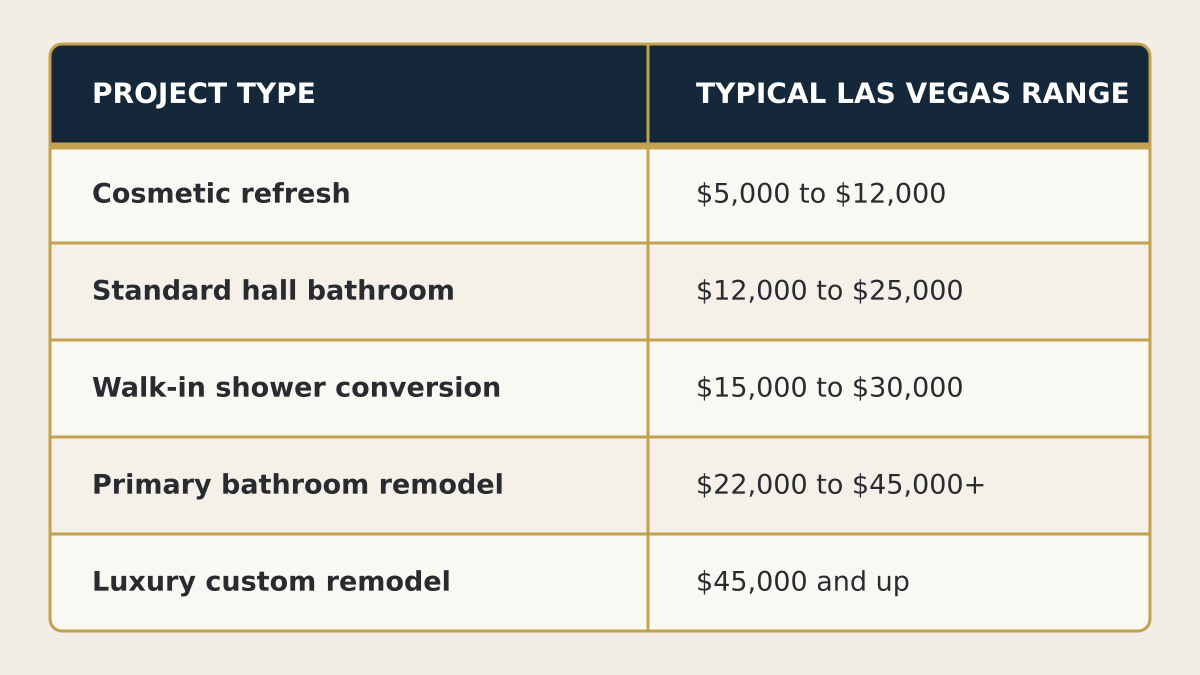
The spread inside each tier is real, not padding. A standard hall bath that keeps its layout and uses mid-grade finishes sits near the bottom. The same room with the plumbing moved, a custom vanity, and stone tile lands near the top.
You will see cost-per-square-foot figures quoted for bathrooms. Treat them as a loose sanity check at best. Bathrooms are driven by fixtures, tile, and waterproofing far more than by floor area, so a small bathroom packed with a custom shower and high-end finishes can easily cost more than a larger, simpler one.
What Affects the Cost
A handful of factors move the number more than the rest.
Size and layout. The single biggest lever most homeowners control is whether the plumbing stays put. Keeping the toilet, sink, and shower in their existing locations avoids rerouting supply and waste lines, which is some of the most expensive and disruptive work in any bathroom. Moving fixtures across the room is where budgets balloon.
Materials and finishes. Tile alone spans a wide range, from basic ceramic to natural stone that costs several times as much per square foot. Vanities, fixtures, and hardware follow the same stock-versus-custom curve. This is the category where you have the most direct control over the final figure.
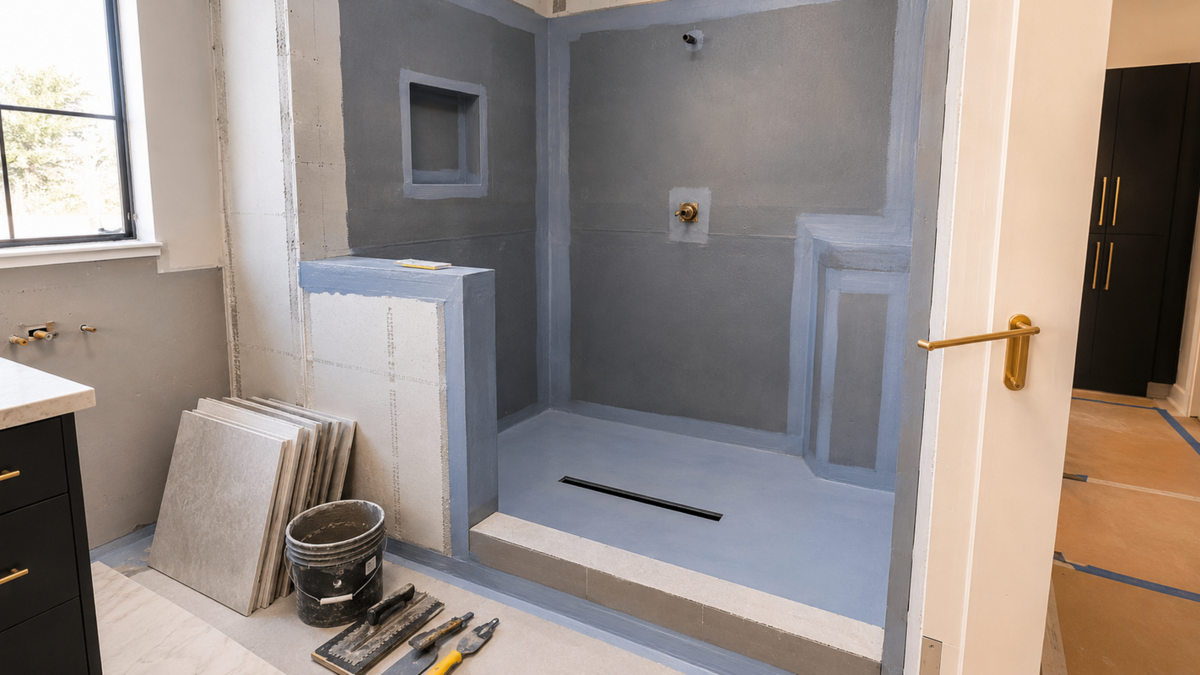
Tile and waterproofing. Proper waterproofing behind tile and inside the shower is not the place to economize, since failures here cause the water damage that turns into the next remodel. It is a real line item and a worthwhile one.
Plumbing and electrical. Older Las Vegas homes often need updated supply lines, drains, or wiring once the walls are open, and added circuits for heated floors, better ventilation, or improved lighting add cost.
Labor. Labor is typically the largest single share of a bathroom budget, commonly landing somewhere between 40 and 60 percent of the total. Skilled tile setters, plumbers, and electricians are in high demand in the valley, and that shows up in the estimate.
Permits. Most bathroom remodels that touch plumbing, electrical, or the structure require a permit, which adds fees and inspection time. More on that below.
For a sense of what a specific upgrade involves, our walk-in shower remodel ideas post covers the most popular conversion in this market, and the bathroom remodeling service page lays out scope in more detail.
Hidden Costs Homeowners Miss
The published ranges cover the visible work. These are the items that surprise people mid-project.
Permit and inspection fees are the first, generally a few hundred dollars for a standard remodel and more when plumbing relocation or structural work is involved. Then there is what hides behind the walls. Demolition frequently uncovers water damage, mold, or dated plumbing and wiring that has to be brought up to current code once it is exposed, and none of it is optional at that point.
Material lead times are a quieter cost. A back-ordered vanity or tile can stall a project for weeks, and a stalled project still has fixed costs. Finally, plan a contingency reserve of roughly 10 to 15 percent of the budget. On older homes it is closer to a certainty than a cushion. The one thing every experienced remodeler agrees on is that the bathrooms with no contingency are the ones that run over.
How to Budget for the Project
Separate must-haves from nice-to-haves before you price anything, since that line is where a budget holds or breaks. Choose durable materials in the spots that see water and wear, where the cheaper option becomes the more expensive one over time. Leave the layout alone unless there is a functional reason to change it, because moving fixtures is the fastest way to spend more. And align design, budget, and construction from the start rather than designing something first and pricing it later. The budgeting discipline in our guide to planning a home renovation in Las Vegas applies directly here, and thoughtful interior design helps you spend where it shows and save where it does not.
Design-Build or Separate Contractors?
You have two ways to run a remodel. Hire a designer, a general contractor, and the trades separately and coordinate them yourself, or work with one design-build firm that carries design, budgeting, permitting, and construction under a single contract. Managing it yourself can work if you have the time and the knowledge to referee the handoffs. A design-build arrangement trades some of that control for one point of accountability and fewer gaps between design and construction.
Whichever route you choose, verify the license. Nevada requires a state contractor license for essentially all work over $1,000, and the Nevada State Contractors Board license search lets you confirm status, classification, and any disciplinary history. Nevada also prints a monetary limit on every license, the largest single project that contractor is authorized to take, so check that it covers your job.
Conclusion
A bathroom remodel in Las Vegas is priced by scope, not by a headline average, and the homeowners who plan for the hidden layer are the ones whose projects finish near their budget. Use the ranges here to get oriented, then get a number based on your actual bathroom.
Fortress Development Group remodels bathrooms across Las Vegas, Henderson, Summerlin, and the surrounding communities. Schedule a free estimate for pricing built around your space and the finishes you want.
Frequently Asked Questions
How much does a bathroom remodel cost in Las Vegas?
Most fall between roughly $5,000 for a cosmetic refresh and $45,000 or more for a full custom primary bath, with standard hall bathrooms commonly landing in the $12,000 to $25,000 range. These are general market figures, and your actual cost depends on size, finishes, and scope.
Is $10,000 enough for a bathroom remodel?
It can be, for a cosmetic refresh or a smaller hall bath that keeps its existing layout and uses mid-grade finishes. It is usually not enough for a primary bath, a shower conversion, or any project that relocates plumbing.
Do I need a permit to remodel a bathroom in Las Vegas?
Generally yes, once the work involves plumbing, electrical, or structural changes. Cosmetic updates like paint or a like-for-like vanity swap often do not, but confirm with your jurisdiction, since the reviewing authority differs between the City of Las Vegas and unincorporated Clark County.
Is it cheaper to keep the existing layout?
Almost always. Leaving the toilet, sink, and shower in place avoids rerouting supply and waste lines, which is among the most expensive parts of a remodel. Layout changes can be worth it, but they carry a real premium.
How long does a bathroom remodel take?
A straightforward remodel commonly runs a few weeks, while larger or custom projects take longer, especially when permits, inspections, or material lead times enter the picture. Older homes with surprises behind the walls can stretch the timeline further.
Does remodeling a bathroom increase home value?
Bathrooms are consistently among the stronger improvements for resale in the Las Vegas market. An outdated bathroom drags on perceived value, and a clean, functional update is one of the first things buyers notice.
What has the biggest impact on cost?
Whether you move the plumbing, the finishes you select, and the labor those finishes require. Of the three, relocating fixtures tends to move the total the most for the smallest visible change.
Should I hire a design-build company or separate contractors?
Separate contractors can save money if you have the time and knowledge to coordinate them. A design-build firm consolidates design, permitting, and construction under one contract, which reduces the handoffs and gives you a single point of accountability.