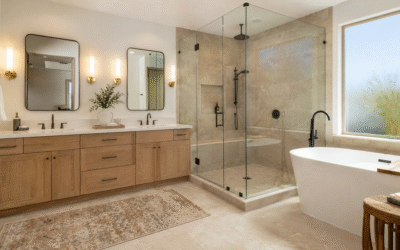
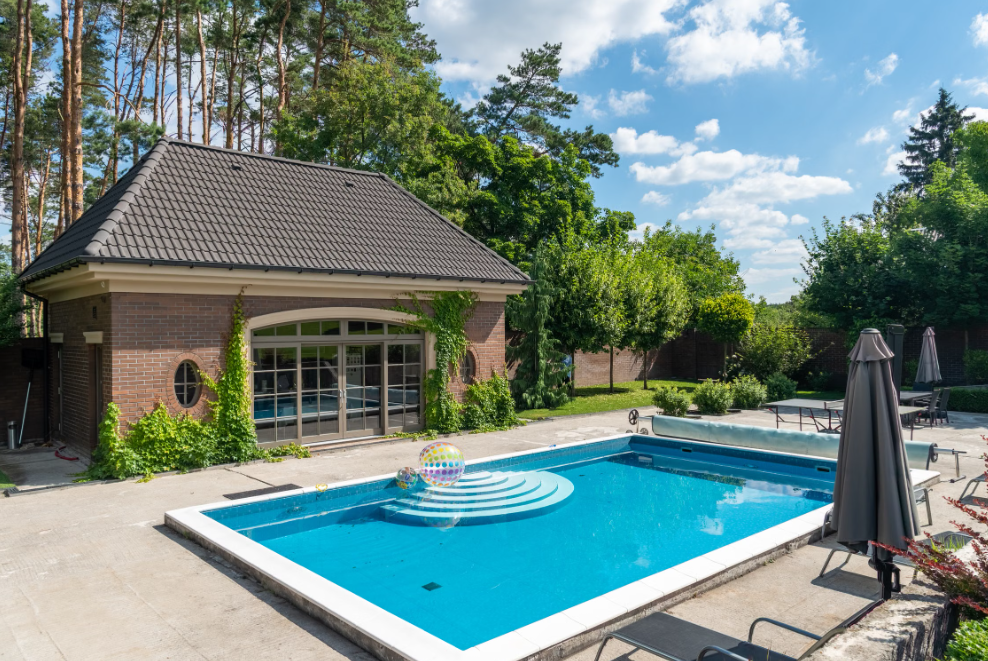
If you’re considering adding a secondary living space to your property, you’ve likely come across both terms. An ADU, or accessory dwelling unit, and a guest house might look similar on the surface, but the difference between an ADU and a guest house goes deeper than size or style. It comes down to purpose, legal classification, and what you’re allowed to do with each structure. Understanding that distinction before you start planning can save you time, money, and a lot of headaches.
Here’s a practical look at the most popular kitchen countertop materials compared by durability, maintenance, lifestyle fit, and long-term value.
What Is an ADU?
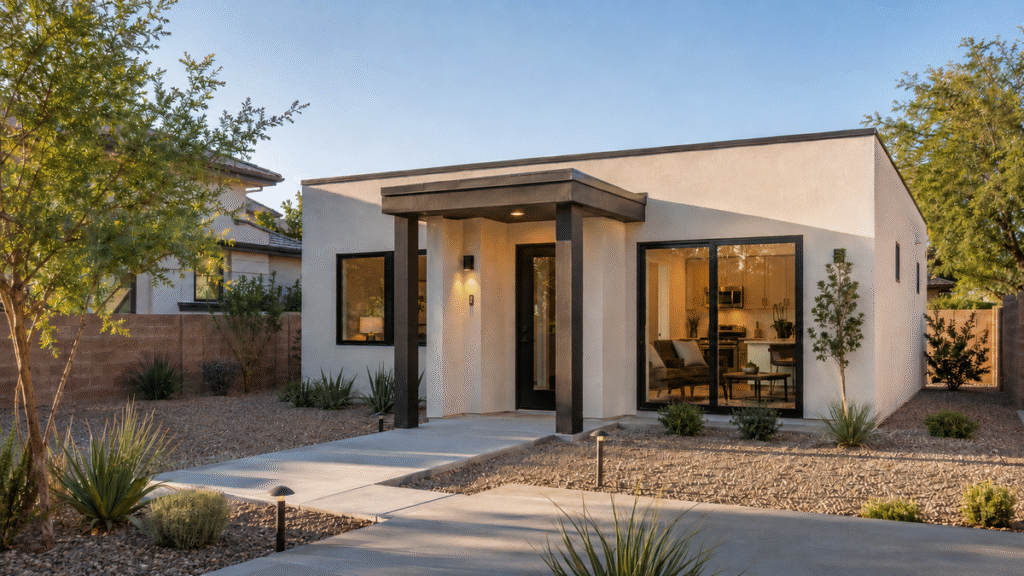
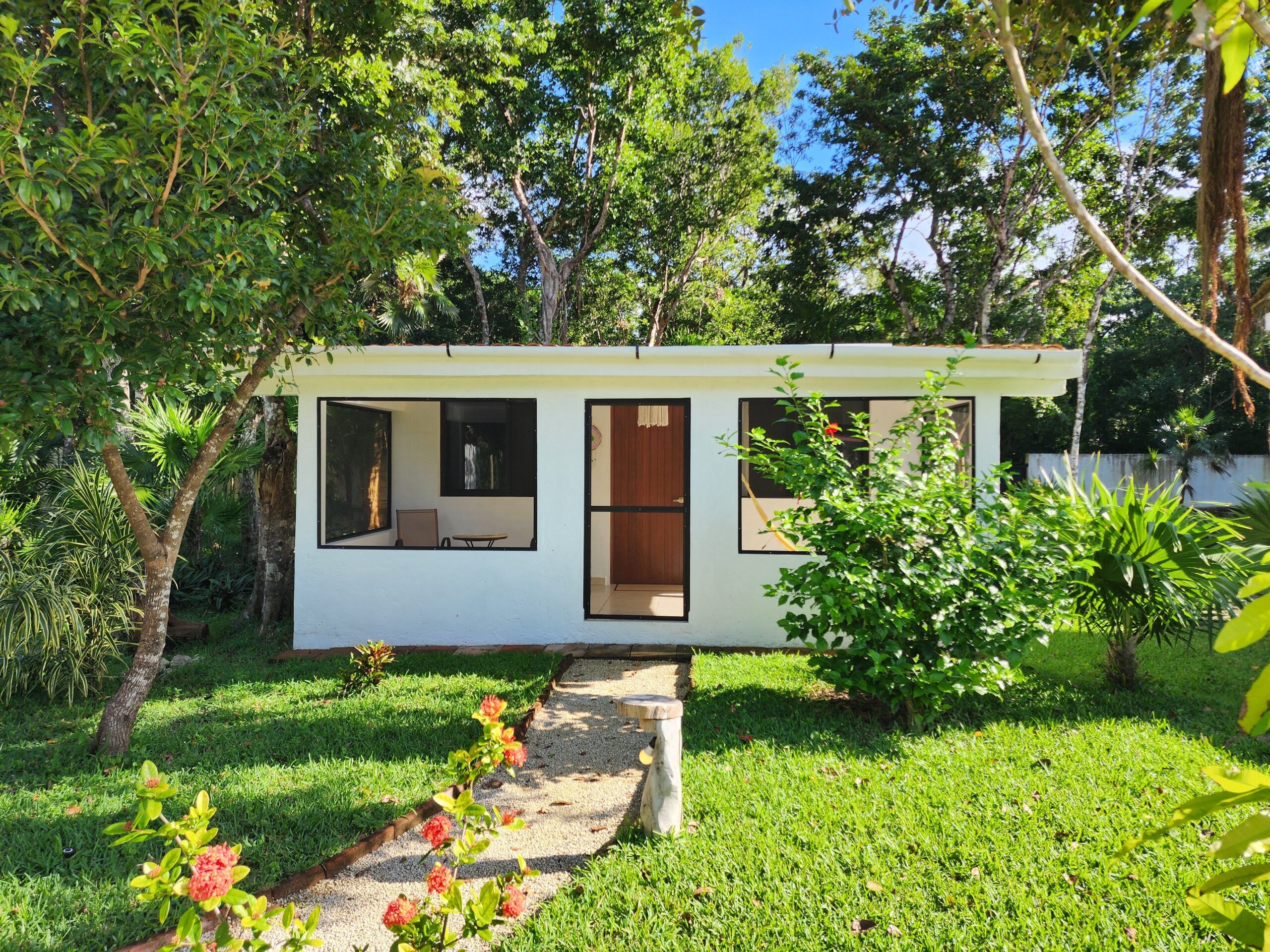
An accessory dwelling unit is a fully independent living space on the same lot as a primary residence. It includes a complete kitchen, bathroom, sleeping area, and its own entrance, making it suitable for someone to live there permanently and independently.
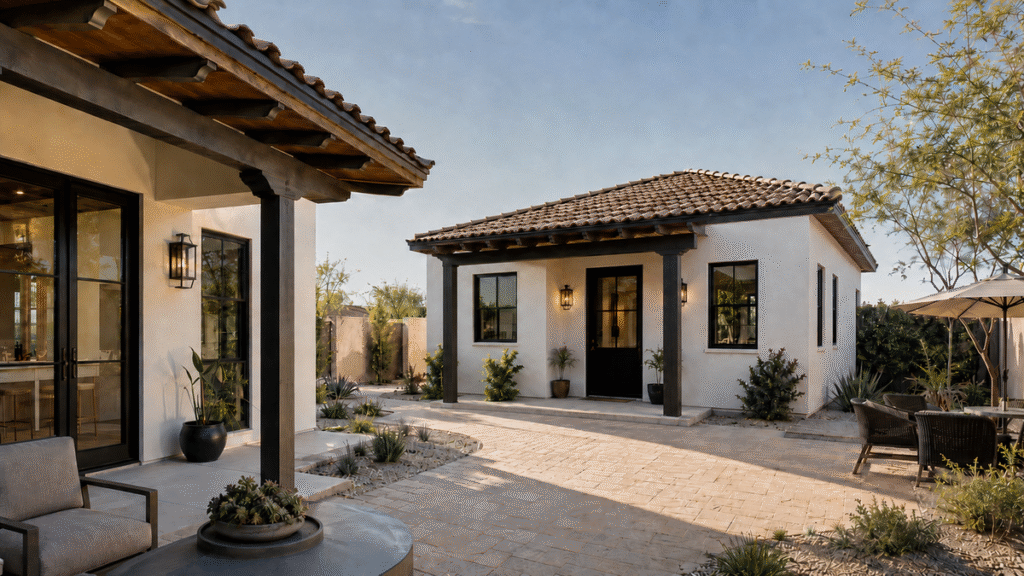
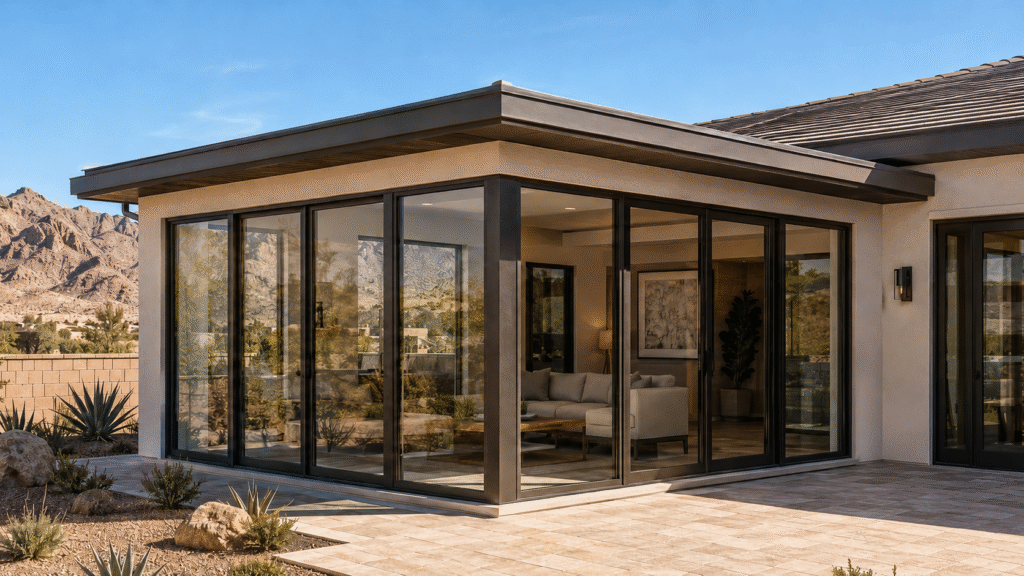
ADUs can be detached structures in a backyard, attached to the main home through a shared wall, or created by converting an existing space like a garage. In Las Vegas, they’re sometimes called casitas, granny flats, or in-law suites, though each term carries slightly different implications depending on the configuration.
Common reasons homeowners build ADUs include generating long-term rental income, housing aging parents or adult children, and creating a space that supports multigenerational living without sacrificing privacy. A home office or studio that doubles as occasional guest quarters is another popular use.
Because an ADU functions as an independent dwelling, it’s subject to permitting, zoning compliance, and building codes that treat it more like a small home than an accessory structure.
What Is a Guest House?
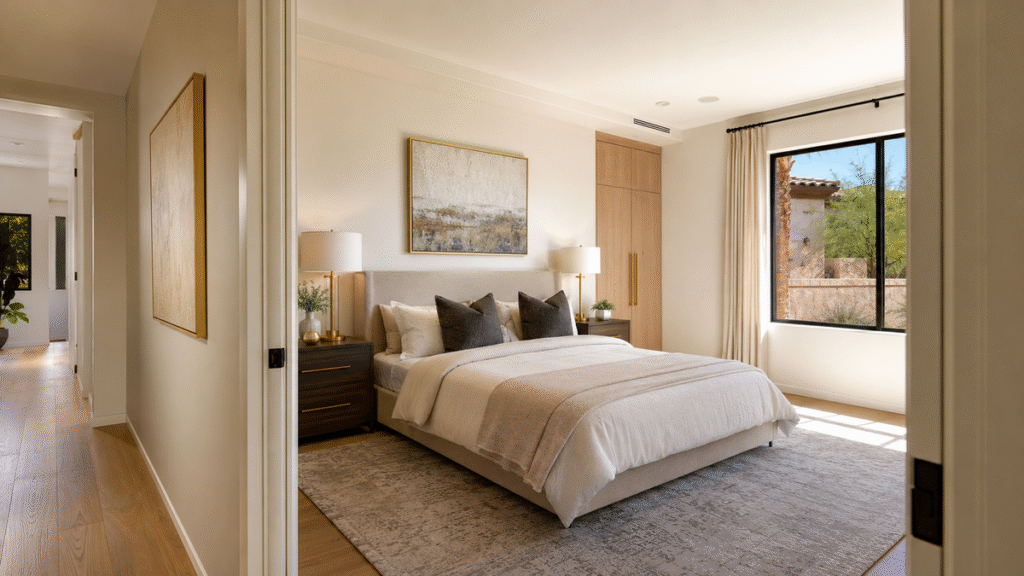
A guest house is a separate structure on the property designed for occasional, short-term stays by visitors. It typically includes a bedroom, a bathroom, and basic living space, but it may not have a full kitchen. In Southern Nevada, guest houses are often called casitas, and the terms are used interchangeably in everyday conversation even when the legal distinction matters.
The key difference in how local authorities treat a guest house is classification. Guest houses are generally considered accessory structures rather than independent dwelling units, which means they face fewer regulatory requirements than ADUs. However, that classification also limits what you can legally do with them. Most jurisdictions don’t allow you to rent a guest house to a paying tenant the same way you can rent an ADU.
Guest houses work well for homeowners who want private, comfortable accommodations for family and friends without the permitting complexity of a fully regulated dwelling unit.
ADU vs. Guest House: Key Differences
Here’s a side-by-side view of how ADUs and guest houses compare across the categories that matter most before you build:
| Feature | ADU | Guest House |
|---|---|---|
| Purpose | Long-term or permanent living | Short-term guest stays |
| Full Kitchen | Required | Often not included |
| Bathroom | Required, independent | Typically included |
| Independent Living | Yes | No |
| Rental Potential | Yes, with permits | Generally not permitted |
| Permitting | More extensive | Less complex |
| Utilities | Usually separate connections | Often shared with main home |
| Property Value Impact | Higher, due to income potential | Moderate |
| Construction Cost | Higher | Lower |
| Best Use Case | Rental income, family housing | Visiting guests, occasional use |
The most important distinction for most Las Vegas homeowners comes down to rental potential. An ADU can legally generate income as a long-term rental. A guest house generally cannot.
Which Option Is Better for Your Las Vegas Property?
The right choice depends on what you actually want the space to do.
If rental income is the goal, an ADU construction project is the only structure that gives you a legal path to collecting rent. A guest house, no matter how well-built, won’t qualify in most Las Vegas area jurisdictions.
If you’re housing a family member, both options can work, but an ADU offers more independence. A parent or adult child living in a fully equipped detached unit has everything they need without relying on the main home for meals or basic facilities.
If the lot is smaller or the budget is tighter, a guest house may be a more practical starting point. It’s less expensive to build, requires fewer permits, and still adds usable space and value to the property.
If long-term flexibility matters, an ADU almost always wins. It can serve as a rental, transition into family housing, or function as a home office depending on what life requires. A guest house is harder to repurpose because it lacks the full amenities that make a space independently livable.
Lot size, local zoning, HOA rules, and budget all play a role. Whatever the goal, those factors need to be confirmed before finalizing any plan.
Nevada Considerations Before You Build
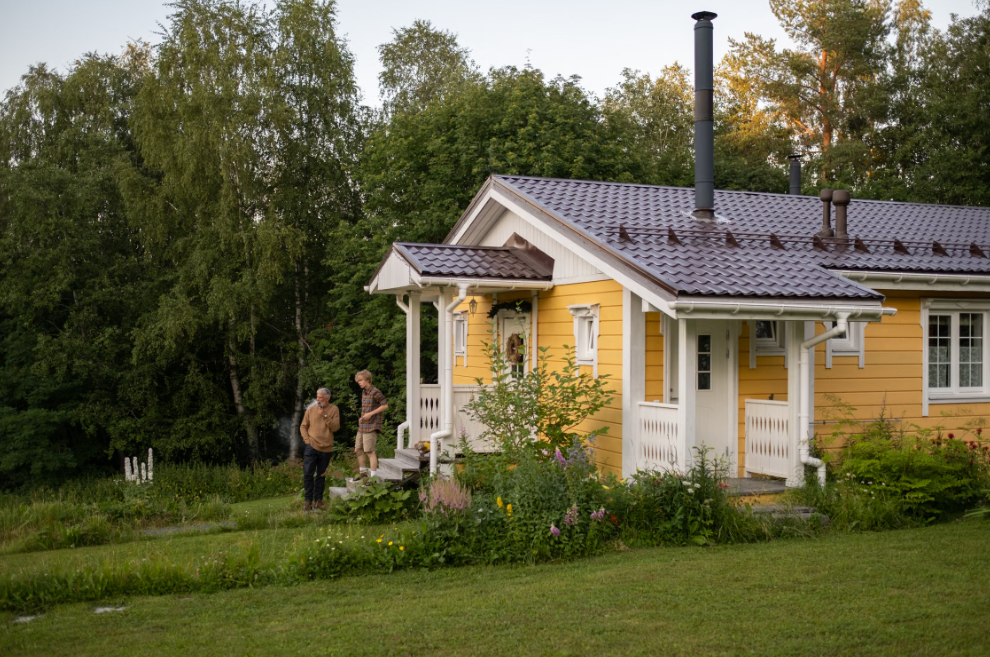
The Las Vegas metro area includes several separate jurisdictions, and the rules don’t always align. Unincorporated Clark County, the City of Las Vegas, Henderson, and North Las Vegas each have their own zoning codes, permitting processes, and requirements. Your address determines which set of rules applies, and assuming your neighbor’s experience will match yours is a common and costly mistake.
For ADUs specifically, Nevada’s current regulations are relatively ADU-friendly. Clark County has removed the minimum lot size requirement, which means lot size alone no longer disqualifies a property. Detached ADUs up to 1,200 square feet can be approved through a ministerial permitting process without requiring neighborhood hearings. That said, setback requirements, parking provisions, and HOA restrictions still vary by zoning district and community.
HOA rules are worth checking early. Even if county or city zoning permits an ADU or detached guest house construction, an HOA’s CC&Rs can restrict or prohibit secondary structures entirely. Nevada state law limits some of those restrictions for ADUs specifically, but enforcing those rights can require legal involvement.
Climate is also a real design consideration in Southern Nevada. Structures built for year-round habitation in Las Vegas need to account for heat load, efficient cooling, and materials that hold up to intense UV exposure and temperature swings. A casita that works in a mild climate may need different design choices here.
Working with a local design-build firm that knows the permitting landscape and builds for the Southern Nevada climate is one of the most practical ways to avoid costly surprises.
Work With Fortress DG
Whether you’re leaning toward an ADU for rental income or a guest house for family use, the planning decisions you make early have the biggest impact on the outcome. Layout, permitting, materials, and how the new structure connects to the rest of the property all need to work together from the start.
Fortress Development Group works with homeowners throughout Las Vegas, Henderson, Summerlin, North Las Vegas, Paradise, Enterprise, and surrounding Southern Nevada communities to plan, design, and build ADUs, guest houses, and custom residential additions. From permit assistance and material selection to full design-build construction, every project is handled under one roof.
If you’re still weighing your options, our home renovation planning guide walks through how to approach a major residential project from the ground up. When you’re ready to talk specifics, schedule a free estimate and we’ll help you figure out which structure makes the most sense for your property and your goals.
Frequently Asked Questions
Is a guest house the same as an ADU?
No. A guest house is designed for short-term visitor stays and is classified as an accessory structure. An ADU is a fully independent dwelling unit with its own kitchen, bathroom, and entrance, built for long-term or permanent occupancy.
Can I legally rent out a guest house in Nevada?
Generally no, not as a standard long-term rental. Guest houses are classified as accessory structures, not independent dwelling units. An ADU is the structure that can legally generate rental income in most Las Vegas area jurisdictions. Always confirm with your local planning department before making assumptions.
Does an ADU need a full kitchen?
Yes. A full kitchen, including a stove, sink, and refrigerator, is one of the defining requirements of an ADU. Without it, the structure is more likely to be classified as a guest house or accessory building, which affects what you can legally do with it.
What is the difference between a casita and an ADU?
In Southern Nevada, casita is a common local term that gets used for both guest houses and detached ADUs. The distinction that matters legally is whether the structure has a full kitchen, independent utilities, and meets ADU permitting requirements. A casita without those elements is generally a guest house.
Which adds more value to a home: an ADU or a guest house?
ADUs typically add more measurable value because they offer rental income potential, which buyers and appraisers factor into property valuations. Guest houses still add value through added flexibility and space, but the impact is generally smaller.
How much does it cost to build an ADU in Las Vegas?
Costs vary widely based on size, unit type, materials, and site conditions. Detached ADUs cost more per square foot than conversions of existing spaces. Budget separately for construction, permits, and utility connection fees, as these are not bundled together.
Do I need permits to build a guest house in Nevada?
Yes. Any structure intended for residential occupancy requires permits, even if it’s classified as a guest house rather than an ADU. The permitting process for a guest house is typically less complex than for an ADU, but skipping it creates legal and resale problems.
Can I convert my garage into an ADU?
Yes. Garage conversions are one of the most common ADU configurations in Las Vegas. The converted space needs to meet full ADU requirements, including a kitchen, bathroom, separate entrance, and applicable building codes.
How do I know whether my property qualifies for an ADU?
Your property’s zoning designation determines eligibility. Clark County has removed the minimum lot size requirement, but setbacks, lot coverage limits, and HOA restrictions still apply. Confirm your zoning classification with the relevant planning department before committing to a design.
Should I build an ADU or a guest house for my family?
If the family member needs full independence, a fully equipped ADU is the better choice. If it’s for occasional visits, a guest house is simpler and less expensive to build. For multigenerational living where someone will be there full-time, an ADU almost always serves the household better long-term.