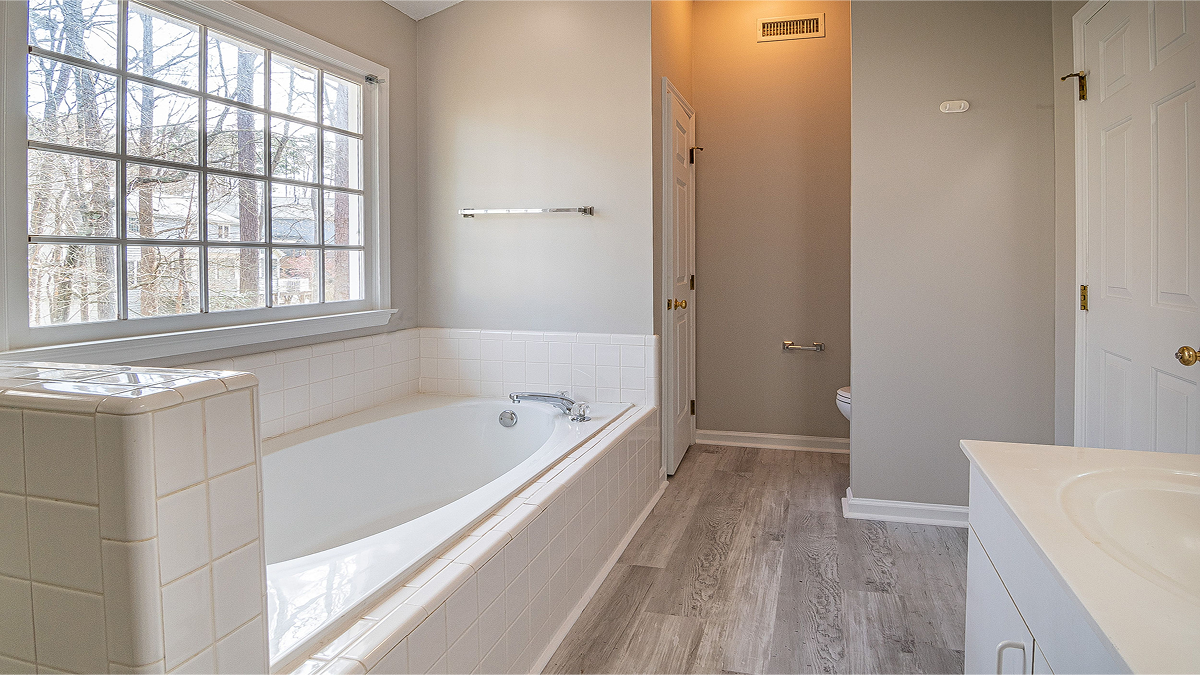
More Las Vegas homeowners are trading rarely used tubs for walk-in showers, and it’s not hard to see why. A well-planned bathtub to shower conversion opens up the bathroom, cuts down on cleaning time, and creates a space that actually fits how people use their bathrooms today.
The best conversions go beyond swapping one fixture for another. They’re about rethinking the space entirely, from layout and materials to lighting and long-term usability. Here’s a look at what’s possible.
Why More Las Vegas Homeowners Are Choosing Walk-In Showers
Across Henderson, Summerlin, North Las Vegas, and surrounding communities, the shift toward walk-in showers has been steady. Homeowners want cleaner layouts, easier maintenance, and bathrooms that feel more open without a major footprint change.
For many, it comes down to function. Tubs go unused while showers handle the daily workload. Converting that space into a custom walk-in shower gives the bathroom better flow and a more current look.
Accessibility is another reason the trend has picked up. Barrier-free and curbless designs work for all ages and lifestyles, not just as an aging-in-place consideration but as a practical upgrade for anyone who wants an easier, more comfortable shower experience.
As a design-build firm serving Southern Nevada, Fortress Development Group helps homeowners create bathrooms that balance beauty, functionality, and long-term value.
10 Bathtub to Shower Conversion Ideas
1. Frameless Glass Walk-In Showers
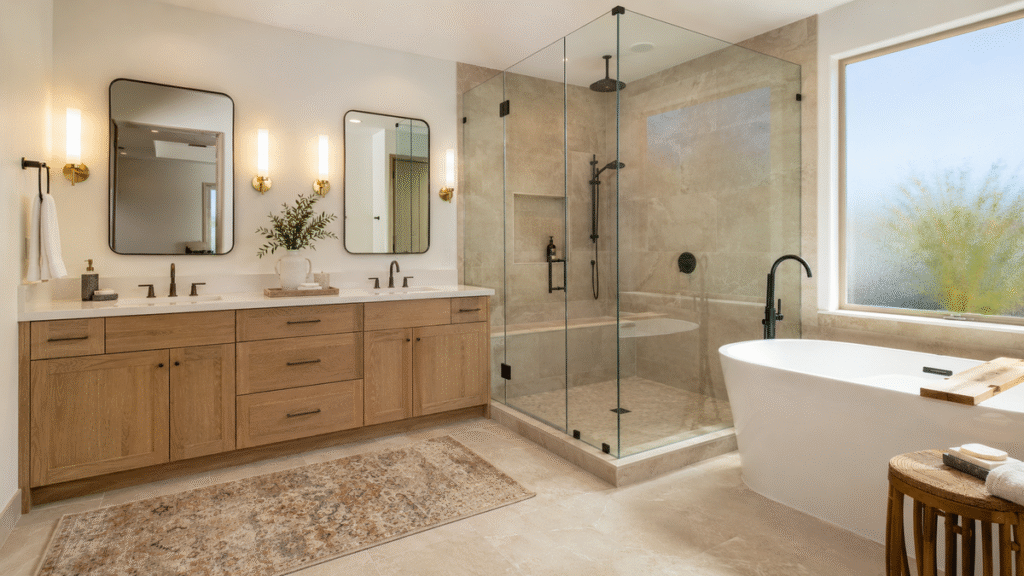
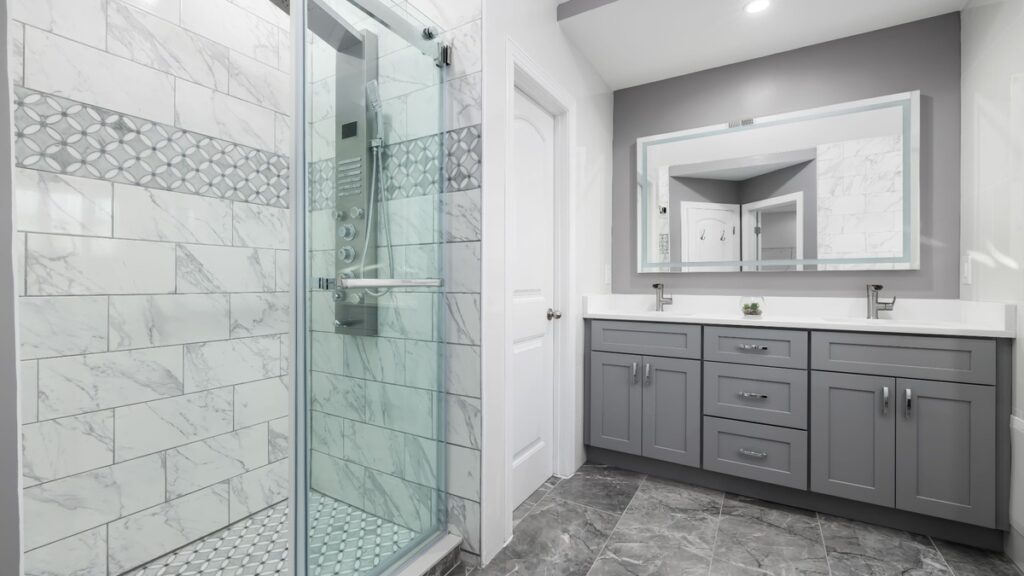
Frameless glass enclosures are one of the most popular bathtub to shower conversion ideas for good reason. They keep the bathroom feeling open, let natural light move through the space, and give any tile work a chance to stand out rather than disappear behind heavy metal framing.
2. Large Format Tile for a Spa-Like Look
Large format porcelain tile reduces grout lines, which means less cleaning and a cleaner overall appearance. Floor-to-ceiling large tile installation creates a seamless, spa-inspired look that’s hard to achieve with smaller formats.
3. Built-In Shower Niches for Storage
Recessed shower niches keep products organized without the clutter of hanging caddies. They can be tiled to match the walls or finished with an accent tile for a subtle design detail. Practical and polished at the same time.
4. Floating Benches for Comfort and Accessibility
A built-in bench adds comfort to any shower and works well for aging-in-place designs without looking clinical. Stone, tile, or teak finishes keep the look consistent with the rest of the space.
5. Barrier-Free Shower Entries
Zero-threshold entries remove the step between the bathroom floor and the shower, creating a smooth, continuous surface. They’re a core feature of accessible shower design and work just as well in modern bathrooms where the goal is a seamless, open-concept look.

6. Rainfall and Handheld Shower Combinations
Pairing a ceiling-mounted rainfall head with a handheld sprayer gives a shower real versatility. The rainfall head creates a spa-like experience while the handheld makes rinsing and cleaning the shower itself much easier.
7. Space-Saving Designs for Smaller Bathrooms
Smaller bathrooms benefit from sliding glass doors, corner entries, and recessed niches that keep the floor plan from feeling tight. A well-planned layout can make a compact shower feel far more usable than the tub it replaced.
8. Statement Tile Walls
A textured tile accent wall behind the shower head creates a focal point without overwhelming the space. Natural stone, large-format slabs, or dimensional tile all work well. The key is keeping the remaining walls simple so the feature wall does its job.
9. Matte Black and Brushed Gold Fixtures
Fixture finishes have a significant impact on the overall feel of a shower. Matte black adds contrast and a modern edge, while brushed gold brings warmth without feeling flashy. Both are among the most popular fixture choices in current bathroom remodeling and pair well with a wide range of tile palettes.
10. Curbless Showers for a Seamless Look
Curbless showers work on two levels. They’re one of the most accessible shower designs available, and they also give the bathroom a contemporary, open-concept feel that pairs well with large format tile and frameless glass. For any bathroom remodeling project where the goal is a clean, modern result, a curbless entry is worth serious consideration.
Custom Shower vs. Prefabricated Systems
One of the most important decisions in a shower conversion is whether to go custom or prefabricated. Here’s how they compare:
| Feature | Prefabricated | Custom Shower |
|---|---|---|
| Installation Speed | Faster | Longer |
| Design Options | Limited | Extensive |
| Tile Choices | Minimal | Unlimited |
| Luxury Appeal | Moderate | High |
| Home Value Impact | Moderate | Higher |
Prefabricated systems have their place, particularly when speed and budget are the main priorities. But the design options are narrow, and the results tend to look it.
Unlike one-day bath companies that focus on quick installations, Fortress DG takes a design-first approach. Every shower conversion is planned around the homeowner’s space, style, and how the bathroom fits into the overall home. The result is a bathroom that feels intentional rather than installed.
Should You Keep One Bathtub?
This is one of the most common questions that comes up during a bathroom remodel, and the answer depends on the household and the home.
For families with young children, having at least one bathtub in the home is usually the practical call. If a second bathroom already has a tub, converting the primary bathroom’s tub to a walk-in shower is a straightforward decision. You keep the tub where it’s needed and gain a better shower where it matters most.
From a resale standpoint, homes with at least one bathtub tend to appeal to a broader buyer pool. Removing the only tub in a home can narrow that pool, particularly in family-oriented neighborhoods. In a multi-bath home, though, converting a secondary tub to a walk-in shower rarely hurts value and often improves it.
What Features Should You Prioritize?
A well-designed custom shower is more than tile and glass. These are the features worth thinking through before any plans are finalized.
Storage: Built-in niches, corner shelves, and recessed ledges keep the shower functional without adding visual clutter.
Lighting: Recessed lighting inside or just outside the shower keeps the space from feeling dim. If natural light is available, frameless glass lets it travel further into the room.
Materials: Porcelain tile works in nearly every shower application. Natural stone adds warmth and texture but requires sealing. For countertops and ledges, quartz surfaces offer a low-maintenance option that holds up well in wet environments.
Fixtures: Rainfall heads, handheld sprayers, and thermostatic controls all add comfort and flexibility. Finish selection, whether matte black, brushed gold, or brushed nickel, ties the hardware to the rest of the design.
Accessibility: Curbless entries, grab bars, fold-down benches, and wider openings are worth planning for regardless of current mobility needs. They make the shower more comfortable for everyone and easier to adapt later if needed.
Bringing Your Vision to Life with Fortress DG
A bathtub to shower conversion done well requires more than a contractor with a demo crew. It requires design thinking from the start, the right materials, and workmanship that holds up.
Fortress DG takes a design-first approach to bathroom remodeling and interior design, working with homeowners throughout Las Vegas, Henderson, Summerlin, North Las Vegas, and surrounding communities to create bathrooms that reflect their style and support their lifestyle.
Whether the goal is maximizing a smaller bathroom, creating a spa-inspired retreat, or building in aging-in-place features, the Fortress DG team handles layout planning, material selection, custom tile work, and premium finishes from start to finish. Schedule a free estimate to get started.
Frequently Asked Questions
What are the most popular bathtub to shower conversion ideas?
Frameless glass enclosures, curbless entries, built-in niches, and large format tile are consistently among the most requested. Rainfall and handheld shower combinations are also popular for the flexibility and comfort they add.
Is a walk-in shower better than a bathtub?
For most adults, yes. Walk-in showers are easier to use, faster to clean, and better suited to daily routines. The right choice depends on household needs, especially if young children are in the home.
Should I keep at least one bathtub in my home?
If you have more than one full bathroom, keeping one tub makes sense for resale flexibility and family use. Converting a second tub to a walk-in shower in a multi-bath home rarely hurts value and often improves it.
What features should I include in a custom shower?
Built-in niches, a bench or fold-down seat, a rainfall head with handheld sprayer, recessed lighting, and a curbless entry are all worth considering. The right combination depends on how you use the shower and the size of the space.
What is a curbless shower?
A curbless shower has no raised threshold between the bathroom floor and the shower floor. The transition is seamless, which improves accessibility and gives the bathroom a more open, contemporary look.
Are frameless glass showers worth it?
Yes, for most homeowners. Frameless glass keeps the bathroom feeling open, is easier to clean than framed alternatives, and holds up well over time. It also lets tile work and design details show without obstruction.
What tile works best for walk-in showers?
Porcelain is the most practical choice for walls and floors. It’s durable, water-resistant, and available in a wide range of finishes including stone and concrete looks. Natural stone works well too but needs regular sealing.
How can I make a small bathroom feel larger?
Light-colored tile, frameless glass, a curbless entry, and recessed niches all help a smaller bathroom feel more open. Keeping the floor tile continuous from the bathroom into the shower also makes the space read as larger.
Is a custom shower better than a prefabricated shower system?
For most homeowners doing a full bathtub to shower conversion, yes. Custom showers offer far more design flexibility, better material quality, and a result that integrates with the home rather than looking like a replacement kit.
What bathroom trends are popular in Las Vegas homes?
Curbless entries, large format tile, frameless glass, matte black and brushed gold fixtures, and spa-inspired features like rainfall heads and built-in benches are all common in current Las Vegas bathroom remodels.