The most enduring modern interior design trends don’t chase what’s new. They chase what works. Today’s best interiors are moving away from cold, bare minimalism toward spaces that feel warm, personal, and genuinely livable, spaces built around how people actually spend their time at home rather than how a room looks in a photo.
For Las Vegas homeowners, these shifts matter even more. The desert climate, the abundance of natural light, and the appeal of indoor-outdoor living all influence which design choices hold up and which ones fall flat. Here’s a look at ten modern interior design trends worth paying attention to, and why they go beyond the current design cycle.
10 Modern Interior Design Trends Worth Knowing
1. Warm Minimalism
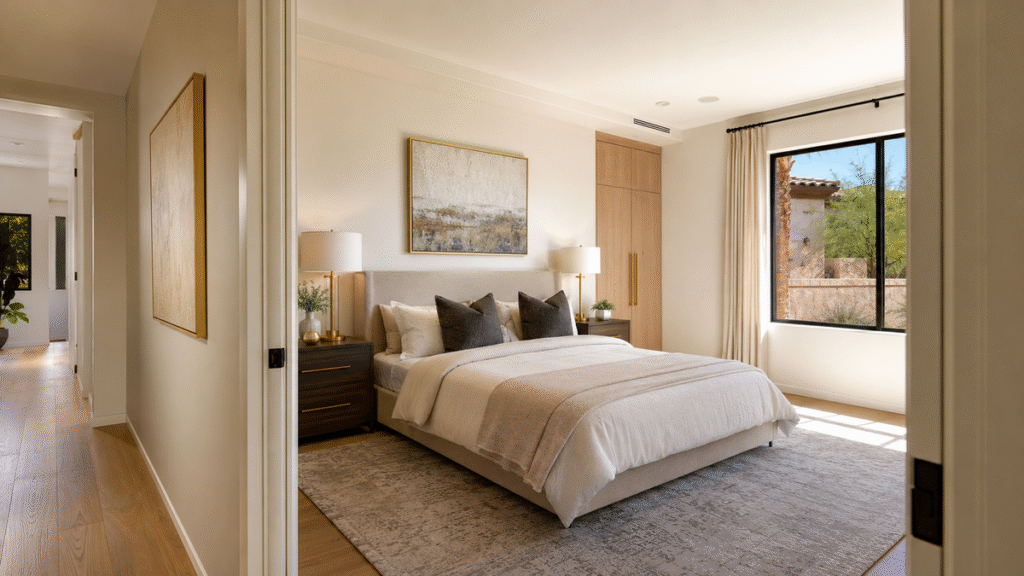
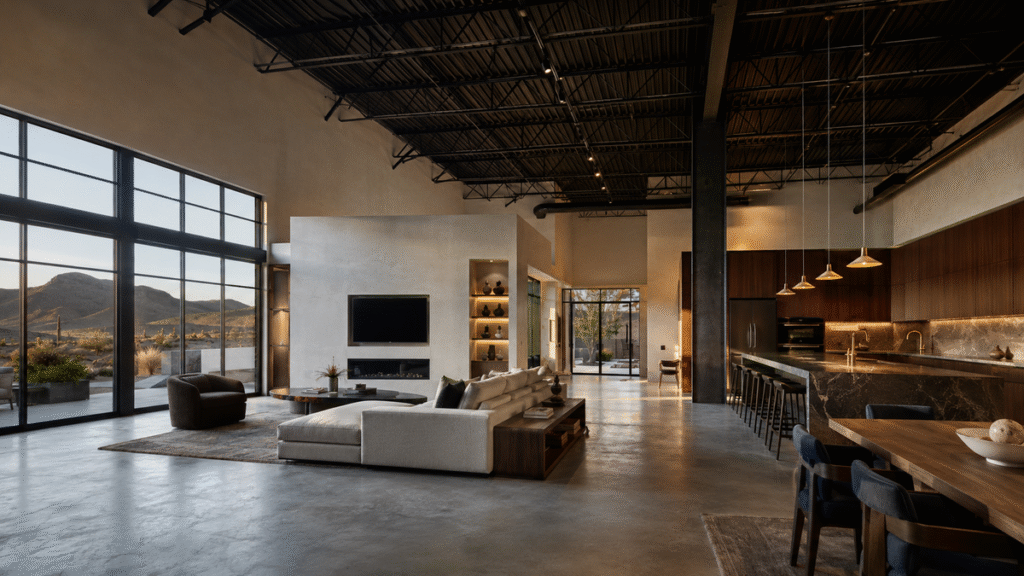
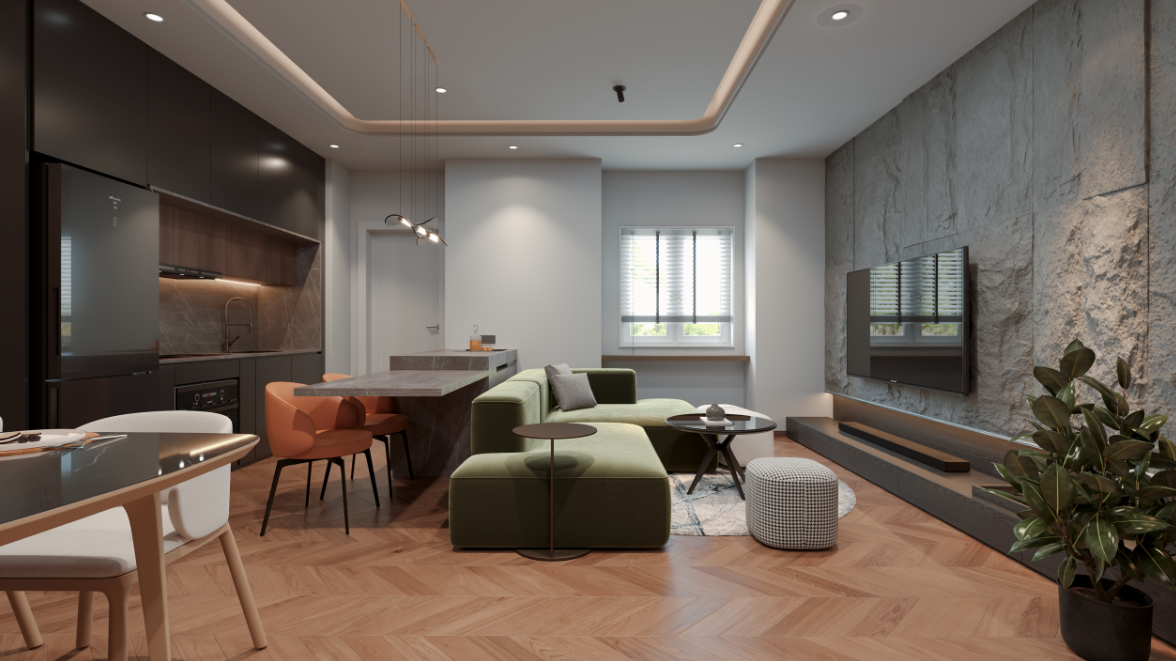
Cool stark minimalism is giving way to something more livable. Warm minimalism keeps the clean lines and reduced clutter but adds texture, soft neutrals, and natural materials that make a space feel comfortable rather than austere. Creamy whites, layered linen, and wood-grain surfaces are doing the work that cold gray palettes used to do, and doing it better for long-term livability.
2. Earth-Inspired Color Palettes
Terracotta, olive green, warm brown, dusty blue, and deep charcoal are replacing the all-white and cool gray interiors that dominated the last decade. As Decorilla’s design team notes earthy neutrals pair beautifully with natural materials and create a grounding, cohesive look that ages well. In Las Vegas, these palettes also complement the desert landscape visible through large windows and sliding doors.
3. Natural Materials and Organic Textures
Natural stone, wood, limewash plaster, linen, and matte finishes are the backbone of modern home design right now. These materials bring depth and texture that manufactured alternatives haven’t been able to replicate, and they tend to get better looking over time rather than worse. For homeowners thinking about long-term value, natural materials also tend to hold their appeal with buyers.
4. Statement Lighting
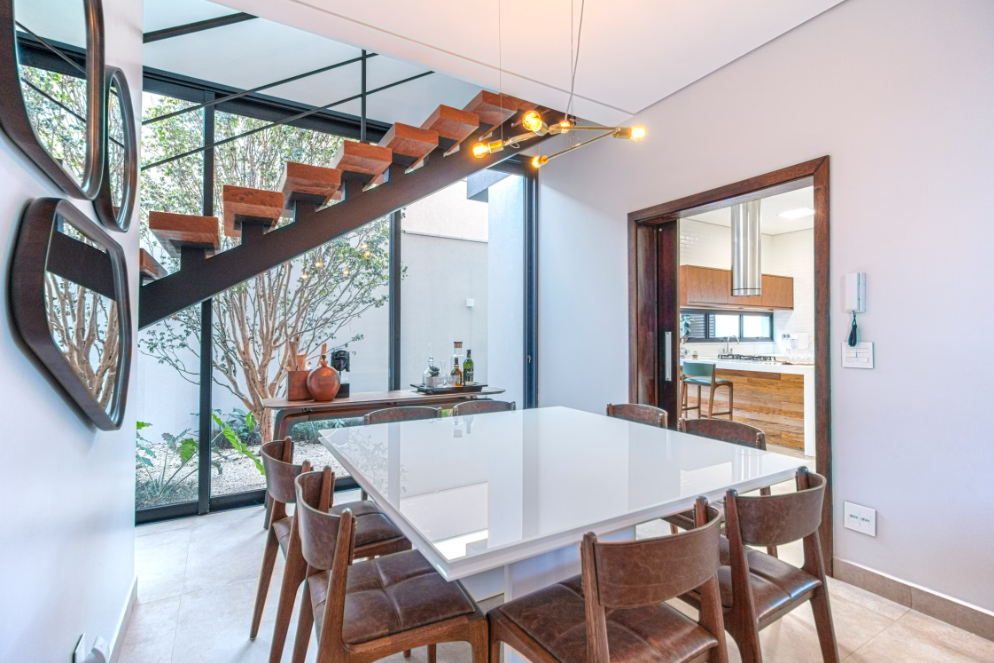
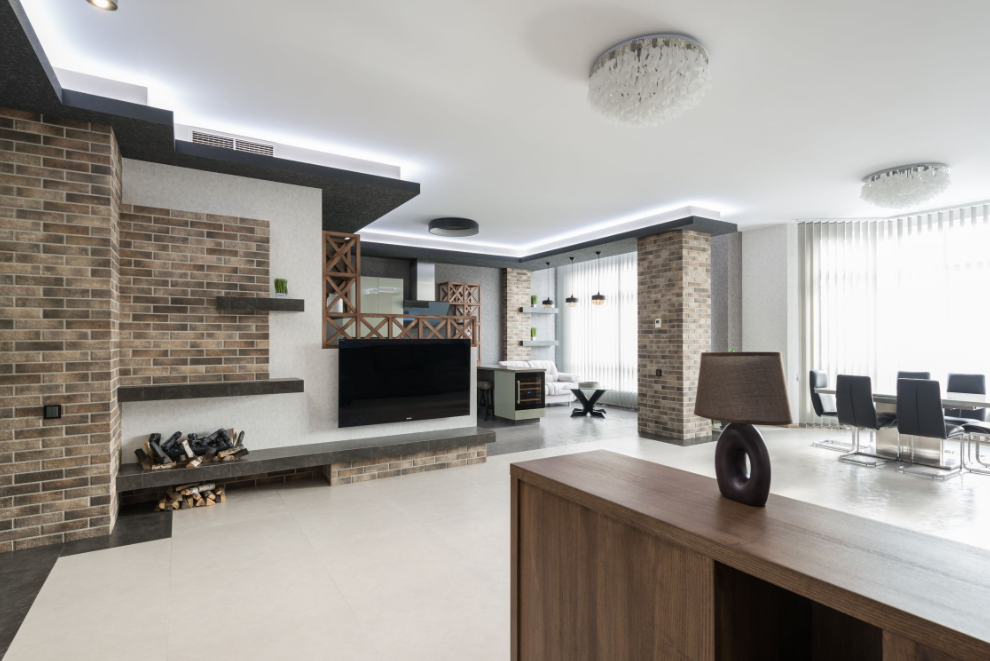
Lighting has graduated from functional to foundational. Sculptural pendants, decorative sconces, and layered lighting schemes are doing as much for a room’s character as the furniture and finishes. The shift toward dimmable, layered lighting also makes spaces more adaptable, brighter for work and gatherings, and warmer for everyday living.
5. Mixed Materials and Finishes
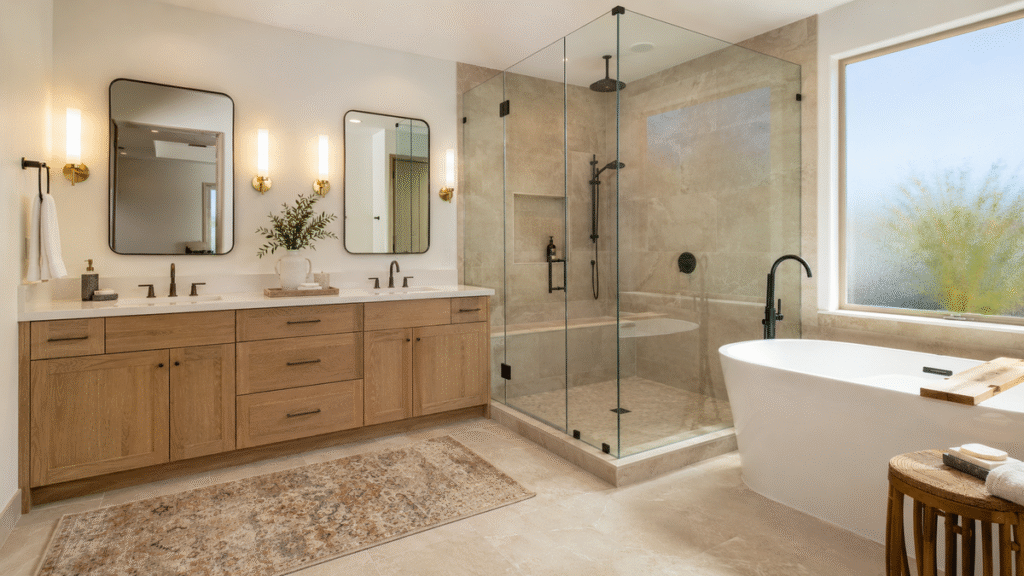
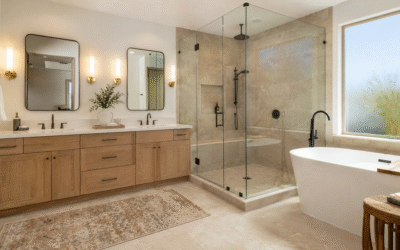
Matching everything is out. Thoughtfully mixing wood and stone, matte and textured surfaces, and varied hardware finishes creates rooms that feel curated rather than assembled. Matte black and brushed gold continue to coexist well across Las Vegas bathroom remodeling projects, and the combination translates just as naturally into kitchens and living spaces.
6. Curated, Personalized Spaces
The showroom look, where every piece matches, and nothing feels personal, has lost its appeal. Homeowners are mixing vintage finds with custom millwork, layering meaningful pieces alongside contemporary furniture, and creating interiors that tell a story. This approach also tends to age better than trend-specific design because it’s built around the household rather than a particular aesthetic moment.
7. Indoor-Outdoor Living
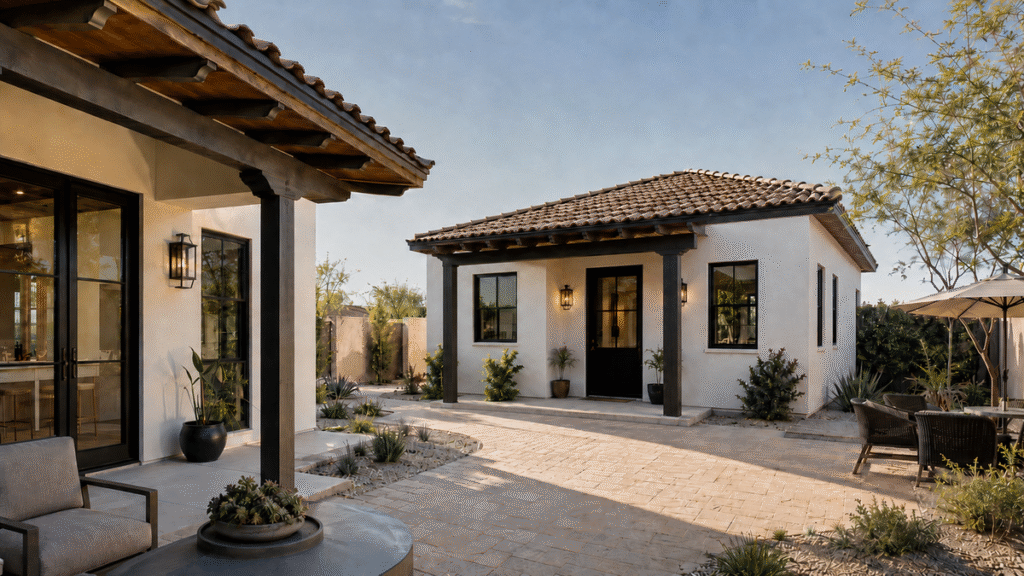
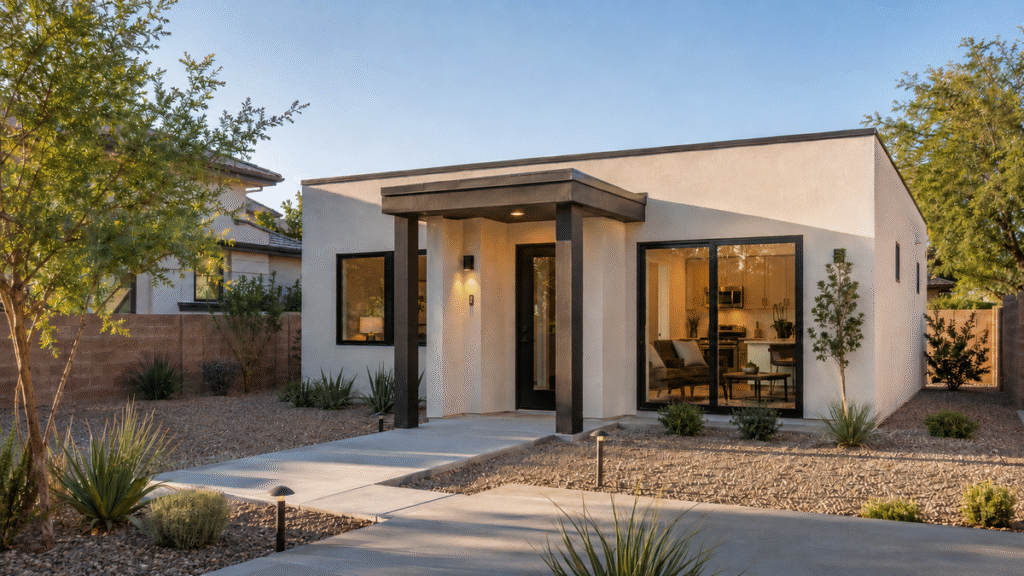
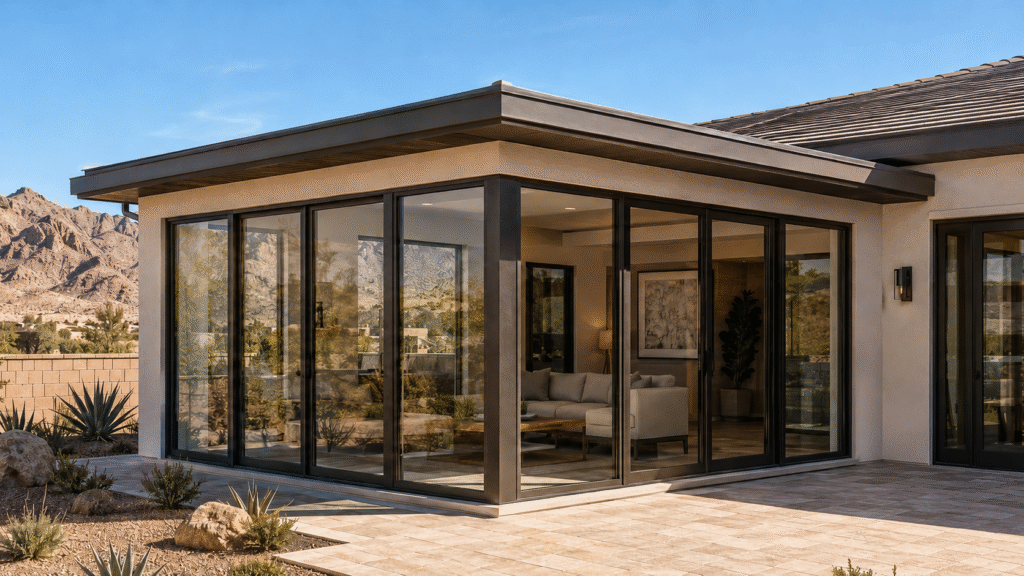
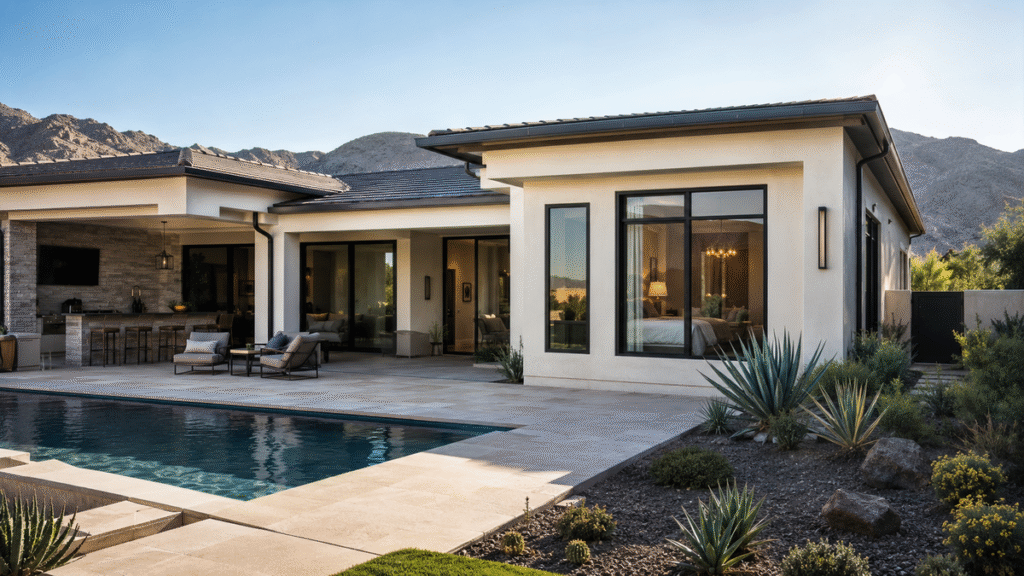
In Southern Nevada, this is less of a trend and more of a design standard. Large sliding glass doors, covered patios, and seamless transitions between interior and exterior spaces are a natural fit for the Las Vegas climate, where spring and fall evenings are ideal for outdoor entertaining and thoughtfully designed covered spaces extend that window year-round. Integrated outdoor spaces in Henderson, Summerlin, and North Las Vegas have become an expected feature in well-designed homes.
8. Smart Storage Solutions
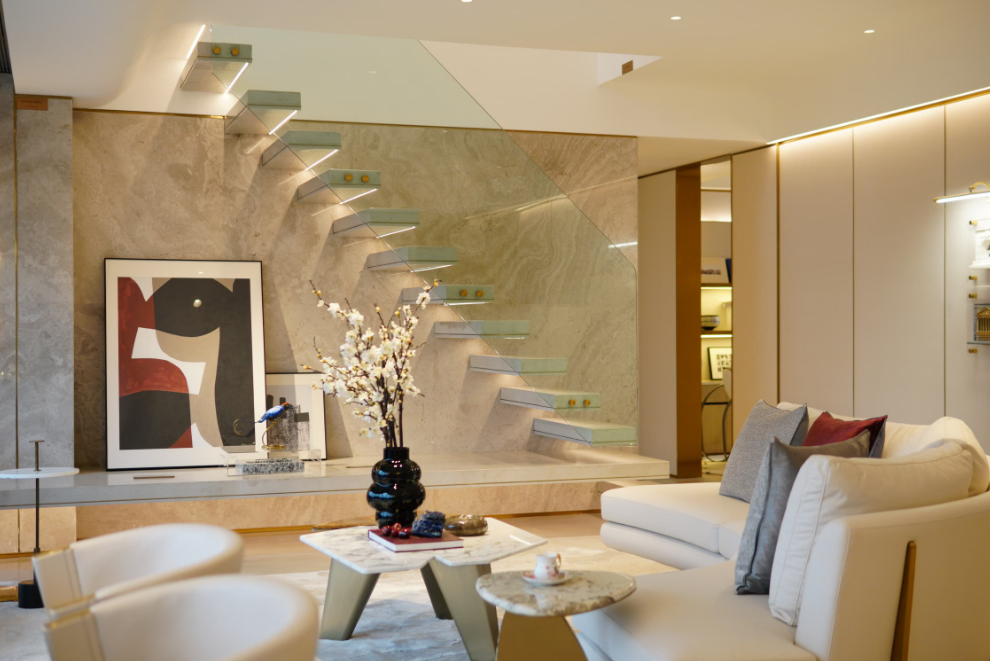
Built-in cabinetry, hidden storage, and multi-functional furniture are getting more attention as open floor plans mature. A beautifully designed living space that has no practical place to put things stops feeling beautiful quickly. Custom millwork, integrated shelving, and well-planned kitchen and bathroom storage make a home more functional every single day, and that functionality shows up in how buyers perceive value.
9. Sustainable and Durable Design Choices
The shift toward quality over quantity is showing up in material selection, fixture choices, and finish standards. Homeowners are choosing surfaces and materials that hold up rather than ones that look current for a few years and then need replacing. For interior design services focused on long-term value, durability and sustainability aren’t separate from good design. They’re part of it.
10. Spa-Inspired Kitchens and Bathrooms
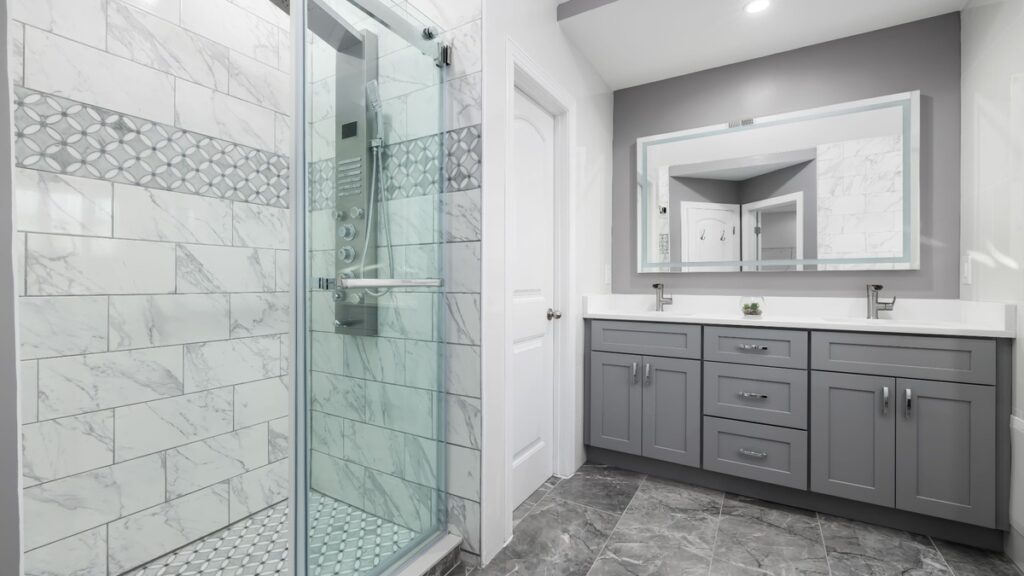
The resort aesthetic that Las Vegas is known for has found its way into residential design throughout the valley. Natural stone, warm wood tones, layered lighting, and premium fixtures are combining to create bathrooms and kitchens that feel intentionally relaxing rather than purely functional. For homeowners who renovate these spaces, the result tends to be both a daily upgrade and a meaningful increase in perceived value.
Which of These Trends Work Best in Las Vegas Homes?
Not every design trend translates equally to Southern Nevada, and a few of them are practically tailor-made for the desert.
Earth-inspired palettes work particularly well here because they complement rather than compete with the landscape. Warm taupes, terracotta, and muted greens visible through large windows or glass doors feel intentional in a way that cooler palettes don’t.
Natural light is abundant in Las Vegas, which is an asset that smart design can leverage or squander. Large windows, glass doors, and frameless shower enclosures let that light move through a home. Window placement and shading strategies matter too. Direct sun exposure in the summer requires UV-resistant materials and finishes that won’t fade or degrade under sustained heat.
Indoor-outdoor living is not a trend to try in Las Vegas. It’s a feature that adds real usable square footage during the long stretches of pleasant weather the valley gets in fall, winter, and spring. Covered patios, outdoor kitchens, and seamless interior-to-exterior transitions perform consistently well in this market. For a deeper look at what makes a Las Vegas home renovation worth the investment, see our home renovation planning guide.
Trends Worth the Investment vs. Ones That Date Quickly
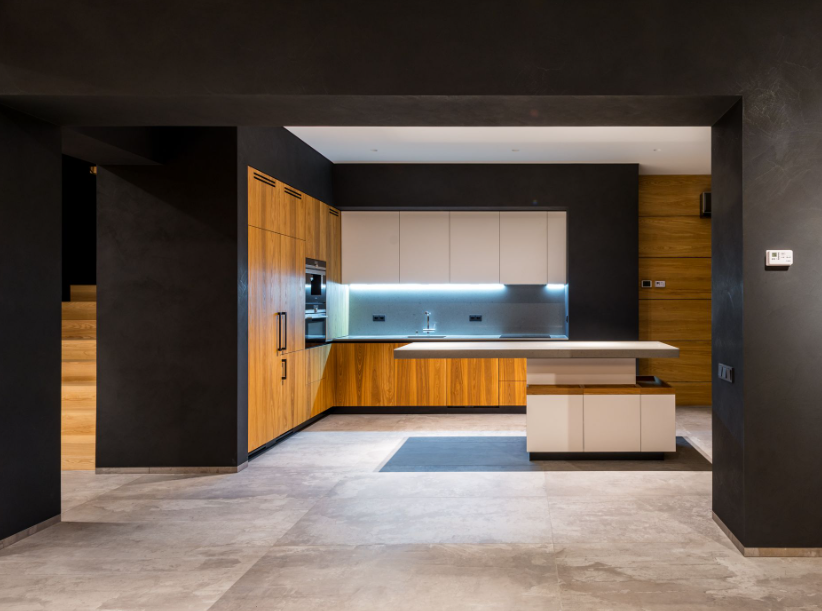
Not every trend is worth committing to in permanent finishes and fixtures. According to NewHomeSource’s design research, macro design trends tend to last around a decade, while microtrends driven by social media can fade in months. The difference matters most when you’re making decisions about flooring, cabinetry, countertops, or any other element that’s expensive and disruptive to change.
Trends worth investing in tend to share a few qualities. They’re rooted in natural materials, clean proportions, and functional improvements rather than purely visual novelty. Warm minimalism, earth-inspired palettes, natural stone, and quality lighting all check those boxes. They also tend to have traceable design roots and adapt naturally over time rather than disappearing entirely.
Trends to approach with more caution are the ones tied closely to a specific moment: highly saturated color schemes applied to permanent surfaces, niche design motifs that don’t connect to the broader architecture, or heavily personalized choices that narrow future buyer appeal. The better approach is to build primary surfaces around durable, neutral choices and let personality come through in pieces that are easier and less expensive to update.
A well-designed home shouldn’t need to be redesigned every five years. The goal is a foundation that works for the long term, with room to add and adapt as taste and lifestyle change. That’s exactly the kind of interior planning that comes out of working with a design-build team that thinks about function and longevity alongside aesthetics.
Bring Your Vision to Life With Fortress DG
Great interior design doesn’t happen by assembling trends. It happens when materials, layout, lighting, and finishes work together as a coherent whole, and when the result fits how the household actually lives.
Fortress Development Group works with homeowners throughout Las Vegas, Henderson, Summerlin, North Las Vegas, Enterprise, Paradise, and surrounding Southern Nevada communities on renovations that range from single-room updates to full whole-home transformations. Every project begins with design, because the decisions made before construction starts are the ones that determine whether the finished space is something you’ll love in ten years or something you’ll want to redo in three.
Whether you’re rethinking a bathroom, a kitchen, or the overall feel of your home, schedule a free estimate, and we’ll help you figure out which direction fits your space, your lifestyle, and your long-term goals.
Frequently Asked Questions
What are the biggest modern interior design trends right now?
Warm minimalism, earth-inspired color palettes, natural materials, statement lighting, and indoor-outdoor living are the most consistent themes in current modern home design. All of them lean toward warmth, texture, and livability over stark or trend-specific aesthetics.
What colors are popular in modern interior design?
Earthy neutrals are leading right now. Terracotta, olive green, warm brown, dusty blue, and deep charcoal are replacing the cool grays and all-white palettes that dominated the previous decade. These tones work particularly well in Las Vegas homes where the desert landscape provides a natural backdrop.
Is minimalism still in style?
Yes, but it’s evolved. Cold, bare minimalism has given way to warm minimalism, which keeps the clean lines and reduced clutter but adds natural textures, soft neutrals, and livable materials. The result feels calm without feeling empty.
How can I make my home feel more modern?
Start with lighting and materials. Updated fixtures, layered lighting, and natural material surfaces make the biggest visual impact without requiring structural changes. Decluttering and adding organic textures like linen, wood, and stone also shift the feel of a space significantly.
Which interior design trends have the best long-term value?
Natural materials, warm neutrals, quality lighting, custom storage, and indoor-outdoor integration all tend to hold their value well. They’re rooted in functional improvements and timeless proportions rather than visual novelty, which means they don’t feel dated as quickly.
How do I incorporate trends without remodeling my entire home?
Apply trends in pieces that are easy to update: textiles, lighting, hardware, paint, and decorative accessories. Reserve permanent and expensive decisions like flooring, cabinetry, and countertops for choices that are more timeless. That way, the foundation of the home doesn’t need to be redone every time the design conversation shifts.
What materials are most popular in modern interiors?
Natural stone, wood in warm tones, limewash plaster, matte porcelain tile, linen, and wool are the most prominent. These materials bring texture and depth that manufactured alternatives don’t fully replicate, and they tend to improve in character over time.
Are sustainable materials worth the investment?
Yes, particularly in Las Vegas, where the desert climate puts real demands on materials. Surfaces rated for UV exposure, heat, and low humidity perform better and last longer than those chosen purely on appearance. Durable, sustainable choices also tend to appeal more to buyers at resale.
What interior design styles work best in Las Vegas homes?
Contemporary desert styles that blend warm neutrals, natural stone, and clean lines work well because they complement rather than compete with the landscape and light. Indoor-outdoor integration, earth-inspired palettes, and materials rated for UV exposure are particularly well-suited to Southern Nevada’s climate and lifestyle.
Should I hire an interior designer before renovating?
Yes. Design decisions made before construction begins are far less expensive than changes made after work has started. An interior designer working alongside your contractor, or a design-build team that handles both, ensures that materials, layout, and finishes work together from the start rather than being reconciled at the end.