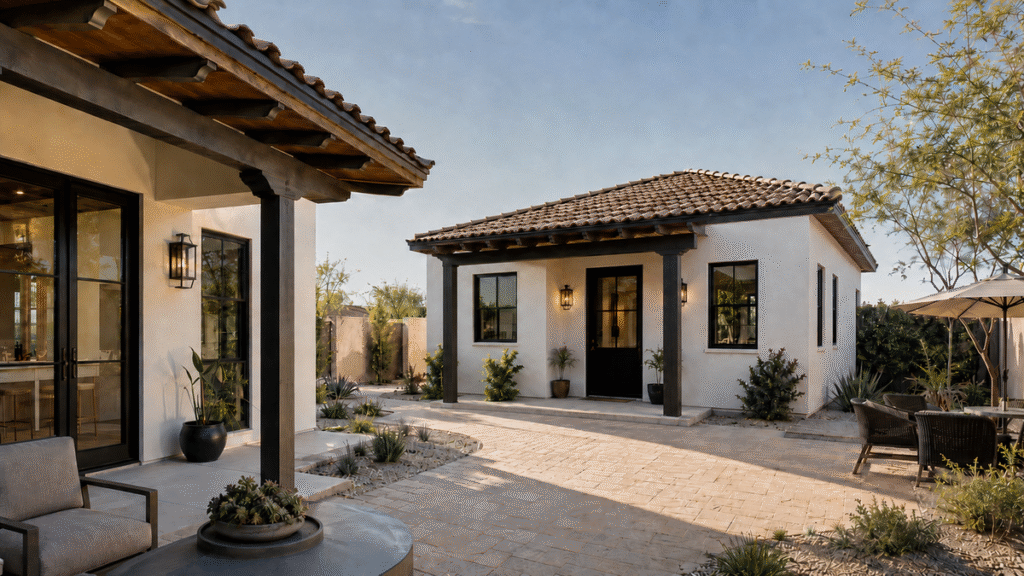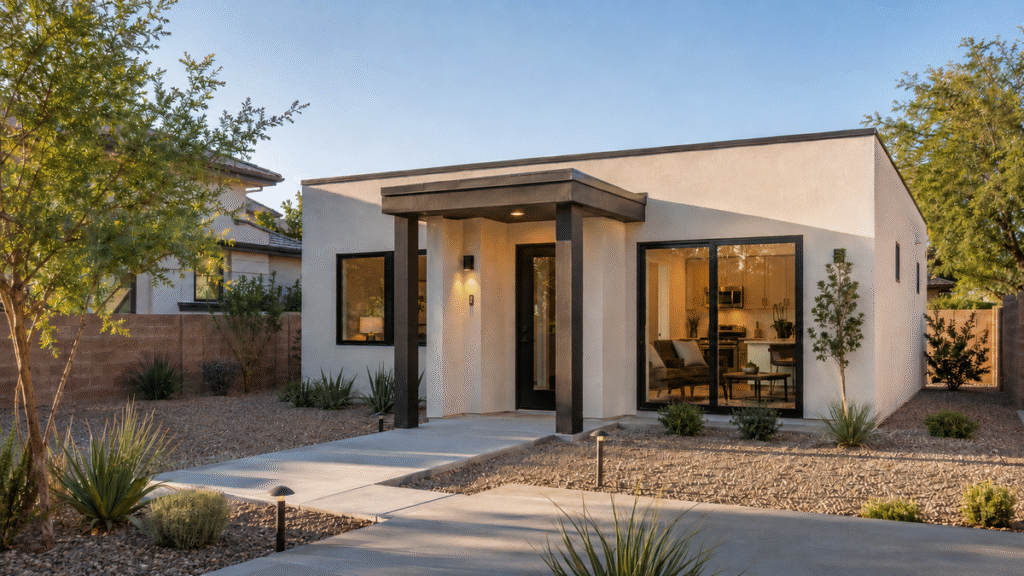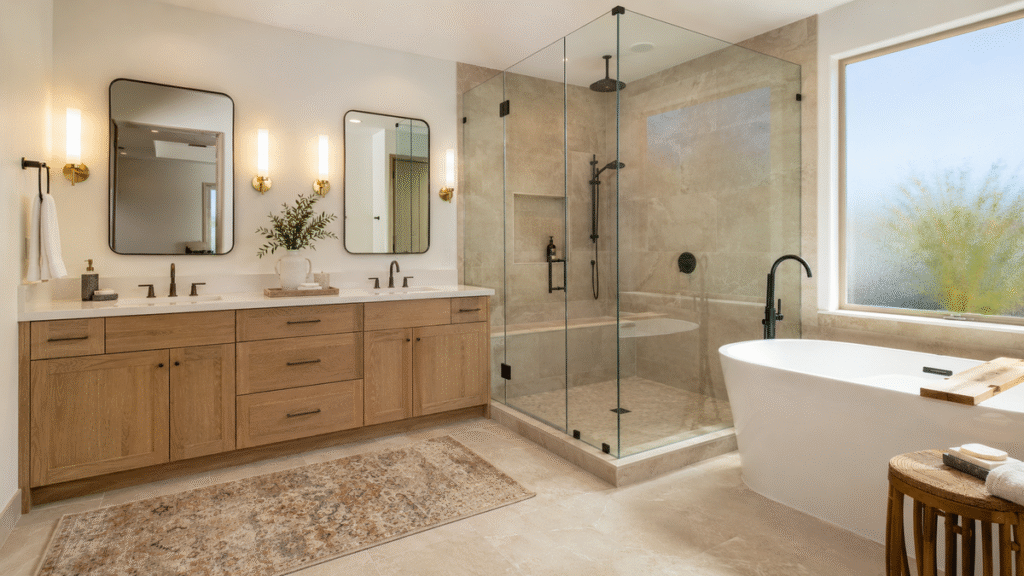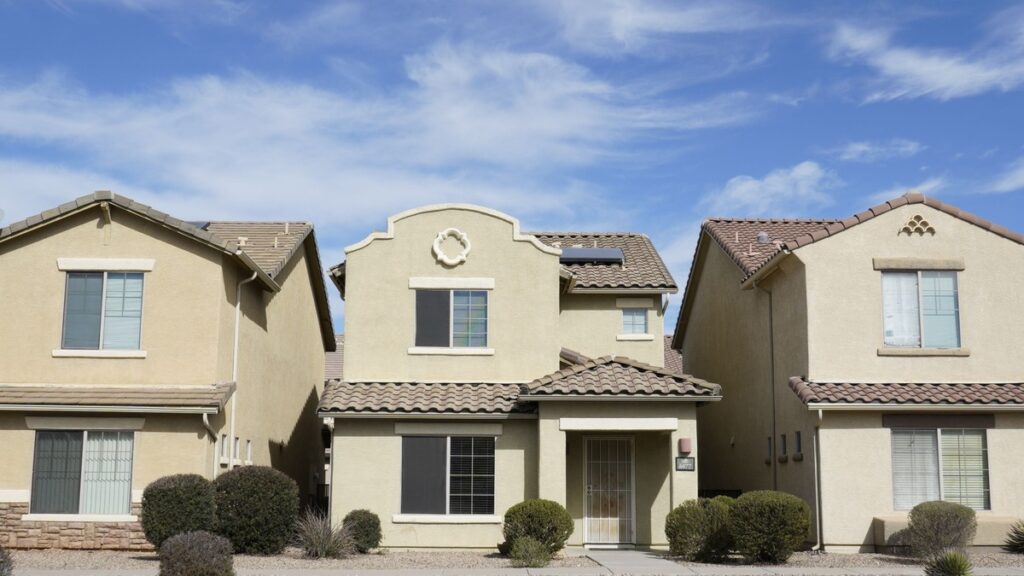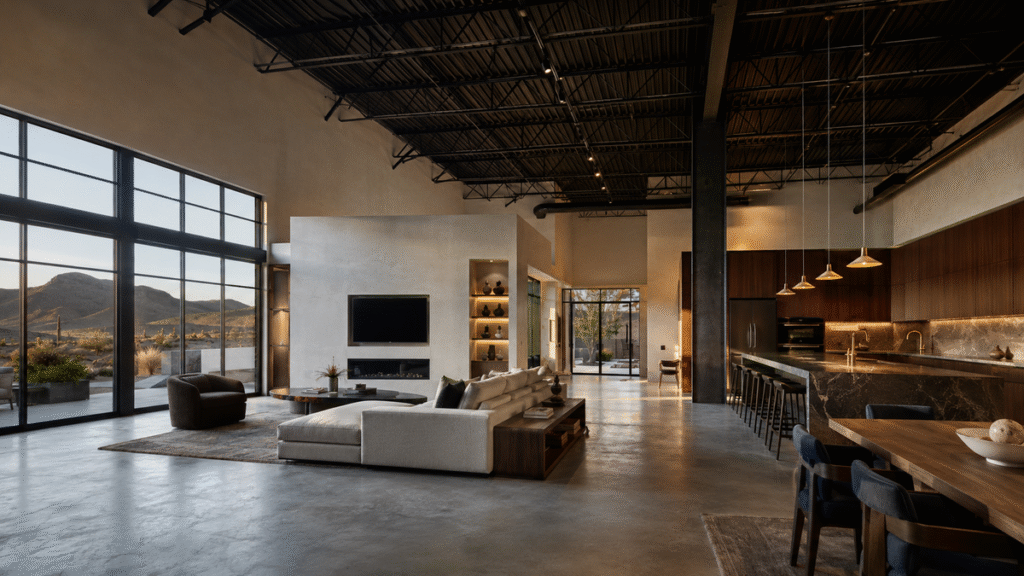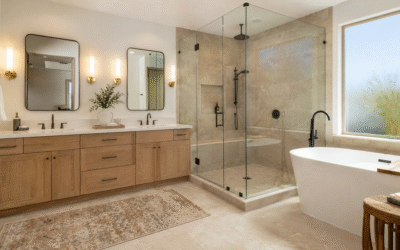
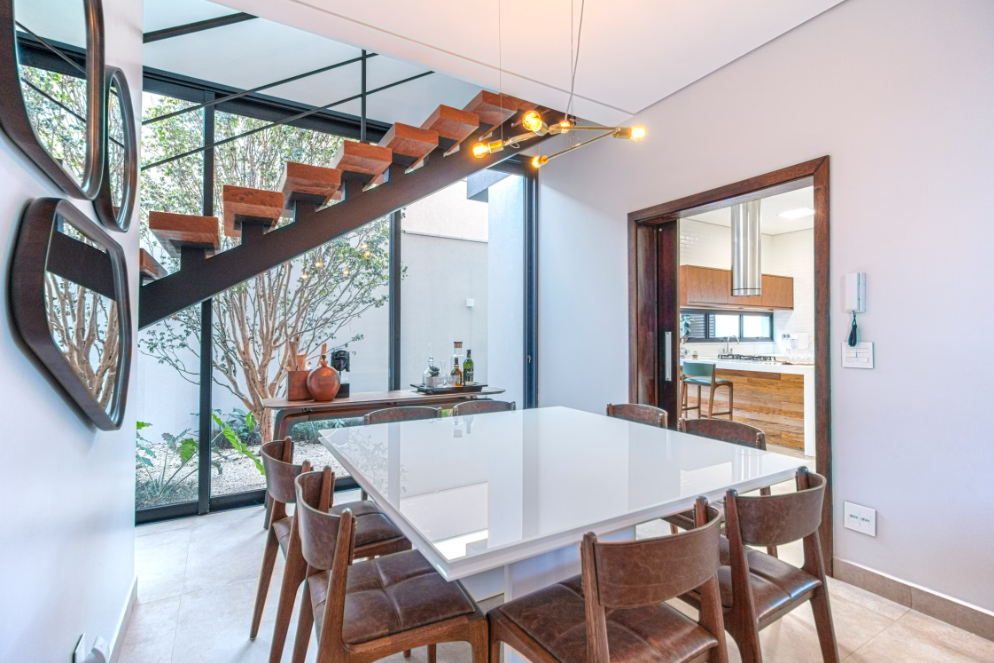
There’s a reason contemporary interior design never really goes out of style. It doesn’t belong to a specific decade, and it doesn’t require a specific look. What it does require is a commitment to how a space functions and feels, not just how it photographs. Clean lines, natural materials, open layouts, and a neutral foundation that gives the home room to breathe. That’s the core of it.
For Las Vegas homeowners planning a renovation or new build, contemporary design is one of the most practical choices available. It adapts to the desert climate, works well with indoor-outdoor living, and holds its resale appeal far longer than trend-driven alternatives.
What Defines Contemporary Interior Design?
Contemporary design is often described as “of the present moment,” which makes it a moving target by nature. What looked contemporary in 2000 looks quite different from what looks contemporary now. But beneath the shifting surface, a few principles have stayed consistent across every iteration of the style.
Open floor plans that let light and air move freely. Neutral color foundations that give the space visual breathing room. Natural materials used in their honest form. Functional layouts that don’t sacrifice comfort for the sake of minimalism. And a deliberate approach to every element, where things earn their place rather than filling space.
Contemporary design is not the same as minimalism, though the two are often confused. Minimalism removes until there’s almost nothing left. Contemporary design curates until what remains feels complete.
Contemporary vs. Modern Interior Design
This is the distinction that trips most homeowners up. The words are used interchangeably in everyday conversation, but in design, they mean very different things. As design educators at Pearl Academy note, modern design is a fixed historical movement rooted in the early to mid-20th century, while contemporary design is fluid and evolving, reflecting what’s current today.
| Feature | Contemporary | Modern |
|---|---|---|
| Time reference | Evolves with the present | Fixed design movement, 1920s to 1970s |
| Influences | Blends multiple eras and styles | Defined by Modernist principles |
| Color palette | Neutral with layered texture | Warm neutrals, occasional bold accents |
| Forms | Mix of clean lines and organic curves | Primarily straight, geometric |
| Materials | Mixed: stone, glass, metal, sustainable | Wood, leather, teak, chrome |
| Flexibility | Highly adaptable | Historically rooted |
| Resale appeal | Broad and lasting | Strong within its aesthetic |
The practical takeaway: if you want a space that feels current and stays relevant without being locked into a specific historical look, contemporary design gives you more room to work with.
Key Elements of Contemporary Interiors
Neutral Color Palettes
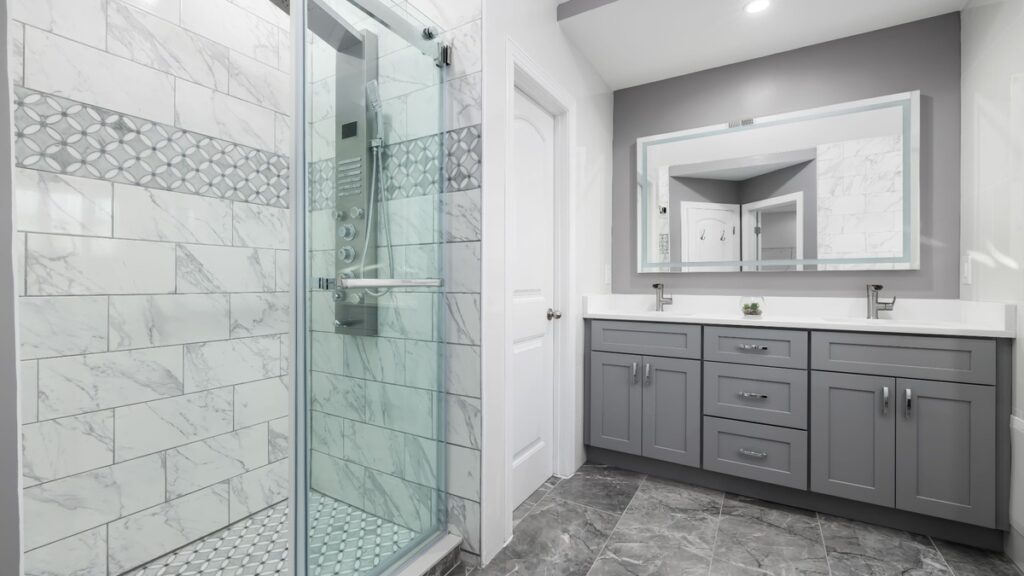
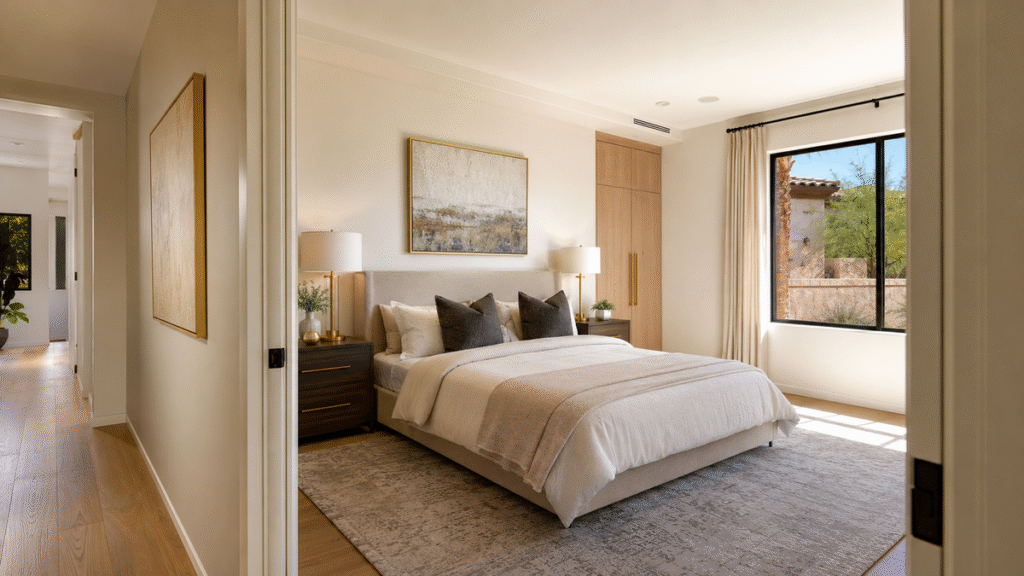
The foundation of any contemporary interior is a neutral backdrop. Warm whites, soft taupes, beige, and muted grays set a calm tone without being cold. Black shows up as an accent, in window frames, fixture finishes, and hardware, grounding the palette and adding definition without heaviness. Color comes in through textiles, art, and accessories that can shift over time.
Clean Lines and Open Spaces
Contemporary spaces breathe. Open floor plans, high ceilings, and minimal architectural ornamentation create visual clarity that makes rooms feel larger and more connected. Structural simplicity is the goal, not bare emptiness. Every line and surface is considered for what it contributes rather than what it fills.
Natural Materials and Texture
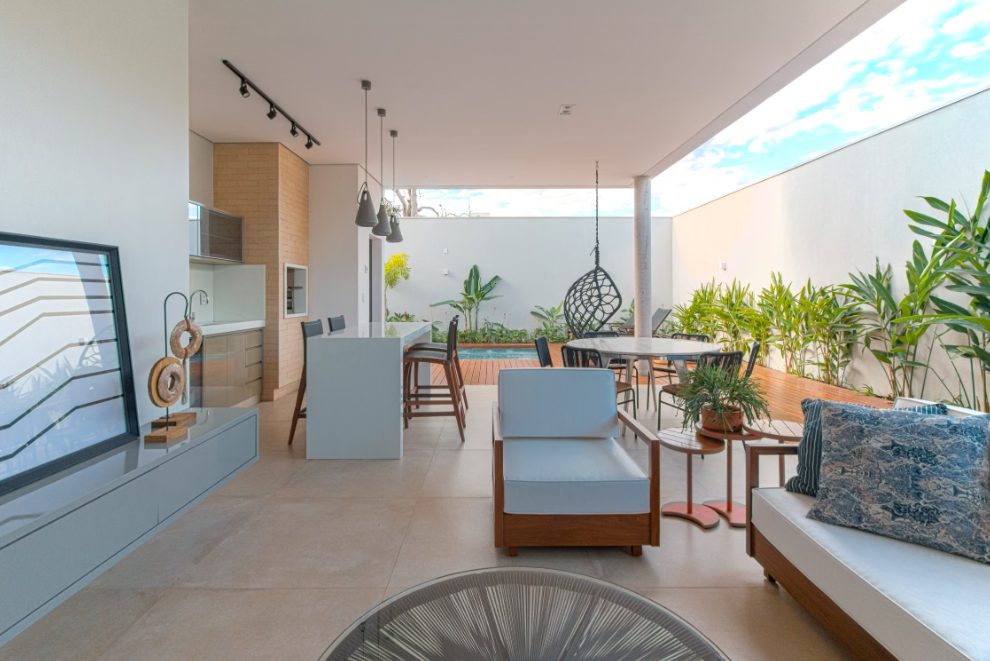
Wood, stone, glass, and metal are the primary material palette of contemporary interiors. Linen and wool add softness. Matte finishes are preferred over high gloss. The goal is honesty of material, letting things look and feel like what they actually are. This is where contemporary design earns its warmth: the textures keep the neutrals from feeling cold.
Statement Lighting and Furniture
Lighting is treated as architecture in contemporary interiors. Large-scale sculptural pendants, layered floor and wall sconces, and carefully positioned recessed lighting all contribute to how a space feels at different times of day. Furniture follows the same logic. Quality over quantity, and every piece is considered for both form and function.
Functional, Comfortable Living
Contemporary design doesn’t ask people to live carefully around it. Storage is integrated rather than visible. Multi-purpose spaces work for everyday life, not just entertaining. Comfortable furnishings are part of the design, not a compromise of it. A contemporary home that isn’t livable isn’t really contemporary. It’s just dressed-up minimalism.
Is Contemporary Interior Design Right for Your Home
Contemporary design adapts well across a wide range of home types and household needs, which is a significant part of its appeal. A few scenarios where it consistently performs well:
- New builds and renovations: The clean lines and open layouts of contemporary design translate naturally into new construction and major remodels, where structural decisions can support the aesthetic from the ground up.
- Growing families: Functional layouts, durable surfaces, and integrated storage make contemporary spaces practical for households with children without sacrificing the design.
- Entertaining: Open floor plans and indoor-outdoor connections create naturally social spaces that work for both everyday life and hosting.
- Resale: Because contemporary design doesn’t commit to a specific era or highly personalized aesthetic, it tends to have broader buyer appeal than trend-specific styles.
The one situation where contemporary design takes more discipline is renovation of an older home with strong architectural character. The style works there, but it requires thoughtful decisions about what to preserve and what to simplify.
Bringing Contemporary Design to Las Vegas Homes
Contemporary design is well suited to Southern Nevada for reasons that go beyond aesthetics. As BDI’s design team points out, the strongest interiors combine timeless forms with materials and features that serve how people live today, and in Las Vegas, that means designing for the climate as much as the look.
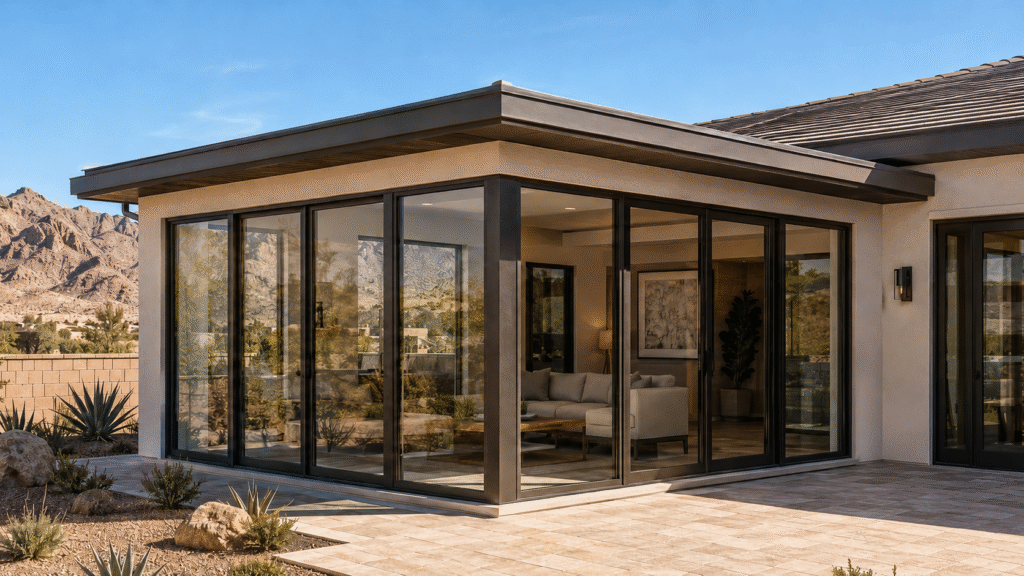
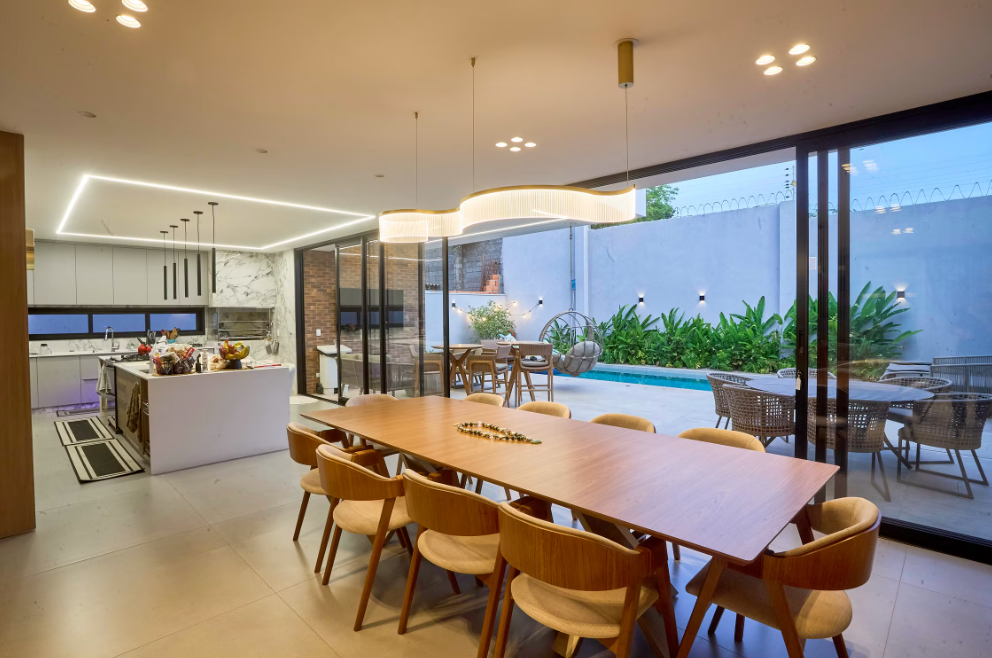
Natural light is one of Las Vegas’s biggest design assets. Contemporary design takes full advantage of it through large windows, sliding glass doors, and open floor plans that let light travel through the home. Window placement also matters for heat management and shading strategies deep overhangs, solar shades, and high-performance glass are part of how contemporary Las Vegas homes stay comfortable year-round.
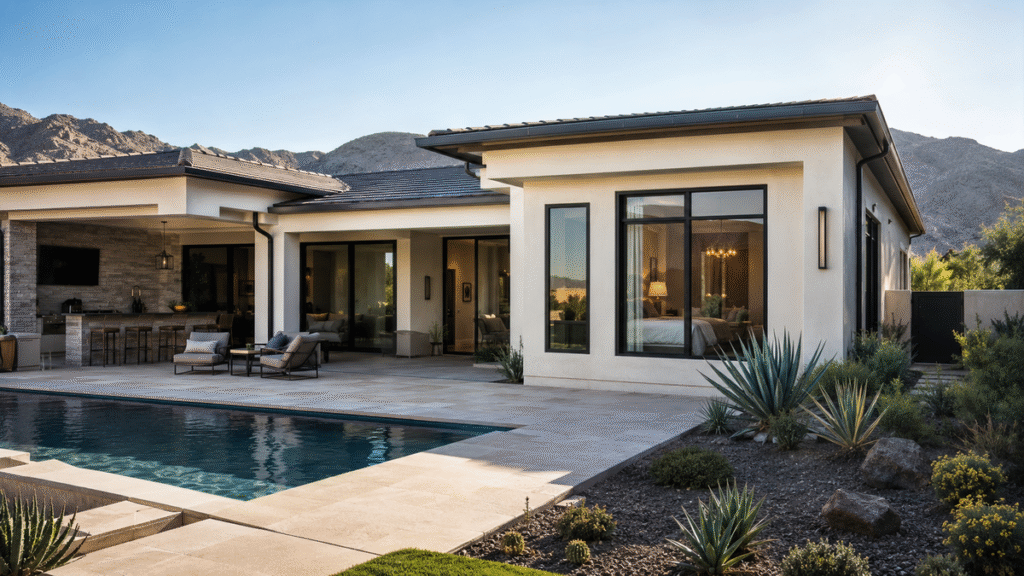
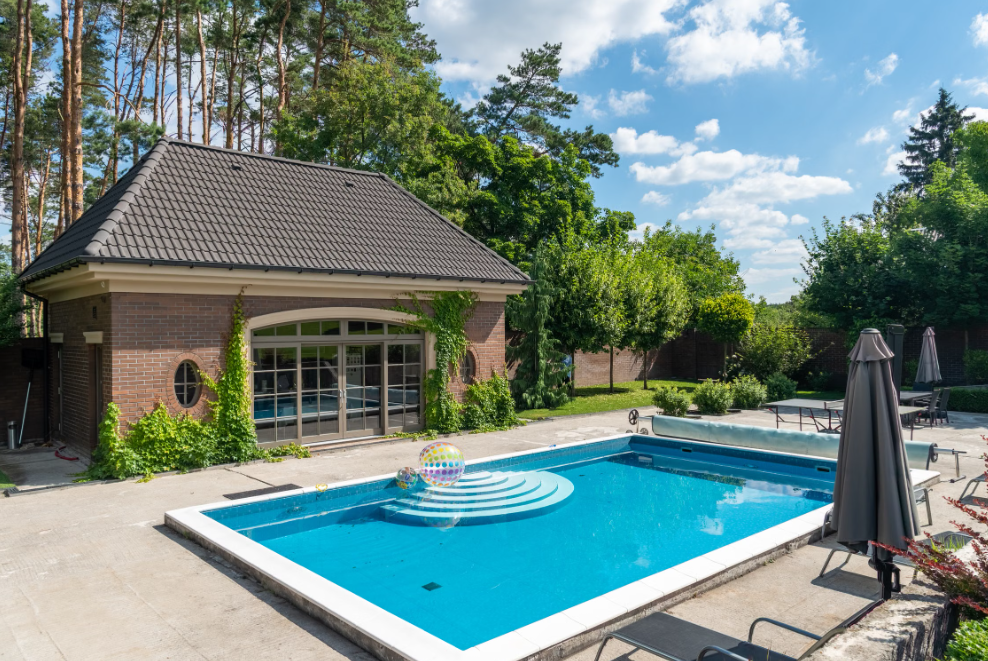
Indoor-outdoor living is a core feature of contemporary design in this market. Seamless transitions between interior spaces and covered patios, outdoor kitchens, and pool areas extend the home’s livable square footage during the long stretches of pleasant weather Las Vegas gets each year. This is where contemporary design and the Southern Nevada lifestyle align most naturally.
Material selection needs to account for the desert environment. Non-porous surfaces resist hard water mineral buildup. UV-resistant finishes hold their color. For surfaces like countertops, choosing materials rated for the climate, not just for appearance, is part of good contemporary design practice in Las Vegas.
Earth-inspired neutral palettes also connect naturally to the desert landscape visible from most Las Vegas homes. Warm whites, soft taupes, and muted greens complement what’s outside the window rather than competing with it. For a broader look at which modern interior design trends hold up best in Southern Nevada homes, that’s worth reading alongside this one.
Work With Fortress DG to Create a Contemporary Home
Contemporary design at its best isn’t something you can pull off by buying the right furniture. It’s the result of decisions made at the layout stage, the material selection stage, and the construction stage, all working together toward a cohesive result.
Fortress Development Group works with homeowners throughout Las Vegas, Henderson, Summerlin, North Las Vegas, Enterprise, Paradise, and surrounding Southern Nevada communities on renovations and custom homes where design and construction are handled together. From interior design services and material selection to bathroom remodeling and full home renovations, every project starts with the design conversation before any commitments are made.
Schedule a free estimate, and we’ll help you figure out how contemporary design can work for your specific home, your lifestyle, and your long-term goals.
Frequently Asked Questions
What is contemporary interior design?
Contemporary interior design refers to whatever is current in design at the present moment. It emphasizes clean lines, open spaces, natural materials, neutral color palettes, and functional layouts. Unlike modern design, it isn’t tied to a specific historical period and continues to evolve over time.
What is the difference between contemporary and modern interior design?
Modern design is a fixed historical movement rooted in the 1920s through 1970s, characterized by Modernist principles, warm neutrals, and natural materials like wood and leather. Contemporary design is fluid and current, blending multiple influences and adapting as tastes and lifestyles change.
What colors are used in contemporary interiors?
Warm whites, soft taupes, beige, muted gray, and matte black accents form the core palette. Color is introduced through textiles, artwork, and accessories rather than walls or permanent surfaces, which keeps the foundation versatile and lasting.
Is contemporary design minimalist?
Not exactly. Contemporary design shares minimalism’s preference for clean lines and reduced clutter, but it’s warmer and more livable. It curates rather than strips, and it prioritizes comfort and texture alongside simplicity.
What materials are common in contemporary homes?
Wood, stone, glass, metal, linen, and wool are the primary materials. Matte finishes are preferred over high gloss. Natural materials used honestly, meaning they look and feel like what they actually are, are central to the style.
Can contemporary design work in older homes?
Yes, with thoughtful planning. The key is deciding which architectural elements to preserve and which to simplify. Contemporary design doesn’t require stripping a home of character. It requires coherence between the structural decisions and the finishes.
Is contemporary interior design a good choice for Las Vegas homes?
Yes. The style’s emphasis on natural light, indoor-outdoor flow, neutral palettes, and durable materials aligns well with Southern Nevada’s climate and lifestyle. It also holds broad resale appeal, which matters in a market where buyers have high expectations.
How can I make my home look more contemporary?
Start with lighting and materials. Updated fixture finishes, layered lighting, and natural surface materials make the biggest visual impact. Decluttering and introducing texture through linen, wood, and stone shift the feel significantly without requiring structural changes.
Is contemporary design timeless or trendy?
It sits between the two. Contemporary design is by definition tied to the present moment, so it shifts over time. But its core principles, clean lines, natural materials, functional layouts, and neutral foundations, have shown consistent staying power and hold their appeal across design cycles.
Should I hire an interior designer for a contemporary renovation?
For anything beyond surface-level updates, yes. Contemporary design achieves its effect through the coherence of decisions made at the layout, material, and construction stages. A designer working alongside your contractor, or a design-build team that handles both, ensures those decisions work together from the start.